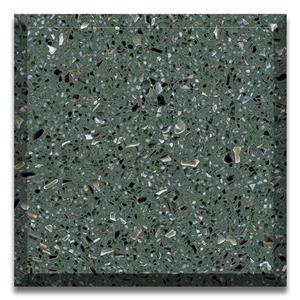
Can Sustainable Terrazzo Become the Next Luxury Stone?

Can Sustainable Terrazzo Design Become
the Next Luxury Stone?
For decades, marble has defined the language of luxury interiors. From hotel lobbies to private villas,
natural stone has long been associated with elegance, exclusivity, and timeless beauty. But in recent years,
designers and architects have started looking beyond traditional materials. A new generation of spaces
is emerging — warmer, softer, and more expressive. At the center of this shift is modern terrazzo design.
Once viewed mainly as a practical flooring material, terrazzo is now entering a completely different
category. Across luxury hotels, boutique retail spaces, designer residences, and high-end commercial
projects, terrazzo interior applications are becoming increasingly sophisticated. At the same time,
growing interest in environmentally responsible construction has pushed sustainable terrazzo into the
spotlight as one of the most promising luxury interior materials for contemporary architecture.
So the question is no longer “What is terrazzo?”
The real question is: can terrazzo become the next luxury stone?
The Changing Definition of Luxury Interiors
Luxury design today looks very different from what it did ten years ago. In the past, luxury was often
associated with polished marble, glossy finishes, and highly decorative spaces. Modern interior trends,
however, are moving toward a more understated aesthetic.
Designers are increasingly embracing:
Warm minimalism
Natural textures
Organic materials
Soft neutral palettes
Timeless surfaces
This shift explains why terrazzo design has become more attractive in contemporary architecture.
Unlike traditional marble, terrazzo offers a softer visual texture and a more relaxed atmosphere while
still maintaining a refined appearance.
In many modern projects, terrazzo feels less formal and more adaptable to daily living. This balance
between sophistication and comfort has made terrazzo interior concepts especially popular in hospitality
and residential design.
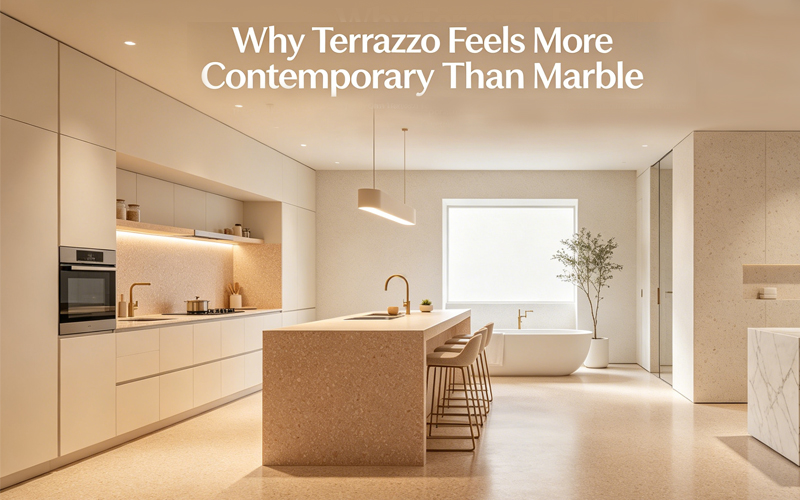
Why Terrazzo Feels More Contemporary Than Marble
Marble remains iconic, but many architects now see terrazzo as a more flexible material for modern spaces.
One reason is customization. Traditional marble slabs are limited by natural veining and quarry availability,
while terrazzo can be produced in countless color combinations and aggregate styles. This flexibility allows
designers to create more personalized interiors.
Another reason is visual warmth. Contemporary luxury spaces are increasingly moving away from cold
gray surfaces and dramatic contrasts. Instead, designers are favoring warm beige tones, soft textures,
and layered materials.
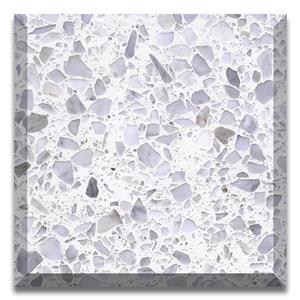
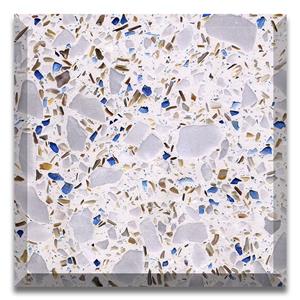
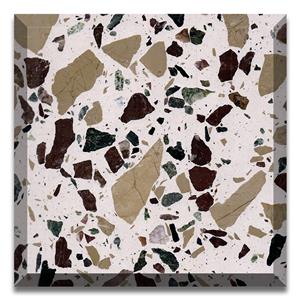
This is where terrazzo flooring becomes especially effective. A terrazzo surface can feel architectural
without appearing overly formal. It introduces texture and depth while maintaining a calm and modern
atmosphere.
Today, many luxury spaces use terrazzo not only for flooring but also for:
Kitchen islands
Bathroom walls
Reception counters
Furniture surfaces
Staircases
Feature walls
As a result, terrazzo is no longer viewed simply as a flooring material. It has become part of a larger
interior design language.
The Rise of Sustainable Luxury
Another major reason behind terrazzo’s growing popularity is sustainability.
The concept of luxury has changed significantly in recent years. Clients are no longer interested only
in appearance; they also care about how materials are sourced and produced. As environmental awareness
increases globally, developers and designers are placing greater importance on sustainable building practices.
This trend has created strong demand for sustainable terrazzo products made with recycled aggregates,
natural minerals, and low-emission production methods.
Compared with some traditional luxury materials, terrazzo offers several environmental advantages:
Recycled marble content
Long product lifespan
Low maintenance requirements
Durable surface performance
Reduced material waste
For architects working on green building projects, these qualities make terrazzo one of the most
attractive luxury interior materials available today.
Sustainability is no longer separate from luxury design. Increasingly, the two concepts are becoming
connected.
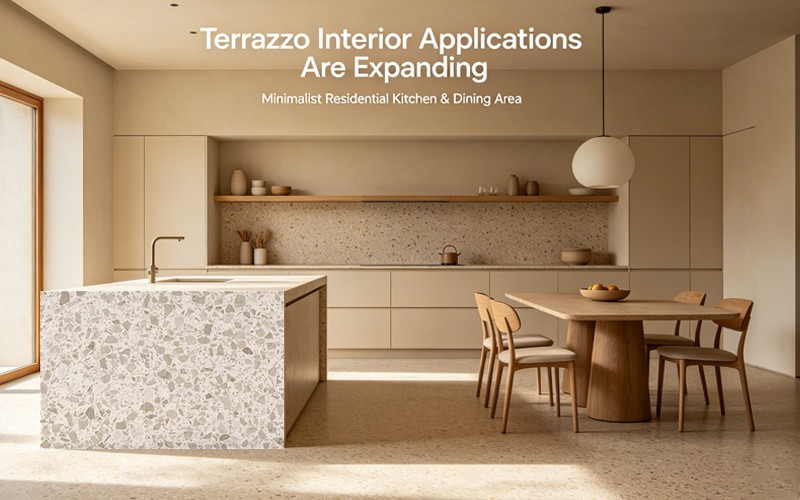
Terrazzo Interior Applications Are Expanding
One of terrazzo's greatest strengths is versatility. Modern terrazzo surfaces can adapt to a wide range
of architectural styles, from minimalist residences to large commercial environments.
In hospitality projects, terrazzo interior applications help create calm and elegant spaces with a strong
sense of material continuity. Designers often use terrazzo to connect floors, walls, counters, and furniture
within the same visual palette.
In luxury retail environments, terrazzo is valued for its clean appearance and durability. It performs well
in high-traffic spaces while still offering a sophisticated finish.
Meanwhile, in residential projects, terrazzo is increasingly used to create warm and tactile interiors that
feel both modern and timeless.
The ability to customize aggregate size, color, and texture has also made terrazzo highly adaptable to
current design trends.
Why Designers Are Choosing Softer Material Palettes
Another important trend shaping modern architecture is the movement toward softer and more natural interiors.
For many years, stark white minimalism dominated luxury design. While visually clean, these spaces
sometimes felt cold and impersonal. Today, designers are introducing warmer materials to create
interiors that feel more welcoming and emotionally engaging.
Materials with visible texture and natural variation are becoming increasingly important in contemporary
architecture.
This explains the growing popularity of:
Warm-tone stone
Limewash textures
Natural wood finishes
Matte surfaces
Neutral terrazzo palettes
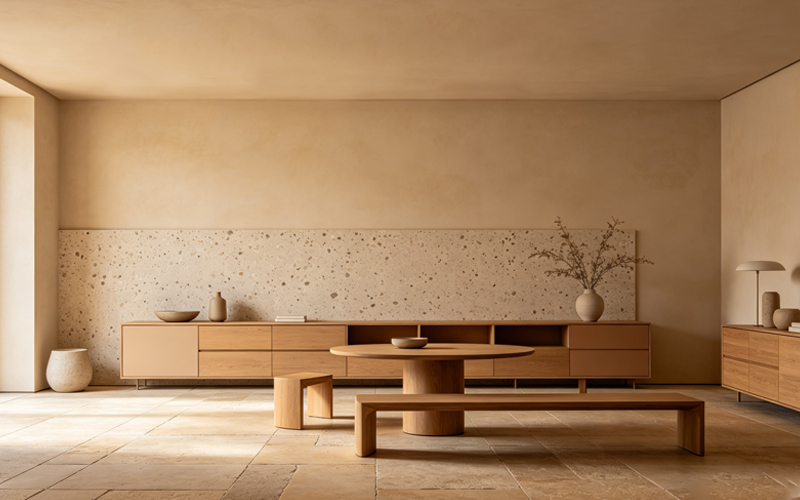
Modern terrazzo design fits perfectly into this direction because it combines subtle movement with
material softness.Rather than overpowering a space, terrazzo adds quiet visual depth.
From Commercial Flooring to Design Statement
Historically, terrazzo was strongly associated with airports, schools, and commercial buildings. Its reputation
was based primarily on durability and practicality.That perception is now changing rapidly.
Today's terrazzo products are far more refined than earlier commercial versions. Advanced manufacturing
technology allows for cleaner surfaces, more sophisticated aggregate blends, and highly customized finishes.
As a result, terrazzo flooring is increasingly appearing in luxury hospitality projects, boutique retail spaces,
and designer homes.
Architects are also beginning to treat terrazzo as a feature material rather than a background surface.
In many modern projects, terrazzo becomes a defining visual element within the overall architectural concept.
This transformation has helped elevate terrazzo into the category of premium luxury interior materials.
Can Sustainable Terrazzo Define Future Luxury?
The future of luxury architecture will likely depend on materials that combine aesthetics, performance,
and environmental responsibility.
In this context, terrazzo is positioned extremely well.
Modern sustainable terrazzo solutions offer:
Long-term durability
Flexible customization
Contemporary visual appeal
Reduced environmental impact
Strong architectural adaptability
At the same time, terrazzo aligns closely with current interior trends focused on warmth, simplicity, and
authenticity.
Rather than replacing marble entirely, terrazzo is creating its own identity within luxury design. It represents
a newer, softer, and more contemporary interpretation of architectural elegance.
Conclusion
Luxury interiors are evolving. Designers today are searching for materials that feel timeless but not
traditional, refined but not excessive, sustainable yet visually sophisticated.This shift is creating new
opportunities for terrazzo in modern architecture.
From high-end hospitality spaces to minimalist residential interiors, terrazzo design is becoming
increasingly influential in shaping the next generation of interior aesthetics. Its combination of texture,
customization, durability, and sustainability has made it one of the most compelling luxury interior
materials in contemporary design.
As architectural trends continue moving toward warmer and more environmentally conscious spaces,
sustainable terrazzo may no longer be viewed simply as an alternative material.
It may become the next definition of modern luxury itself.