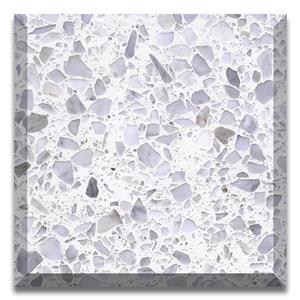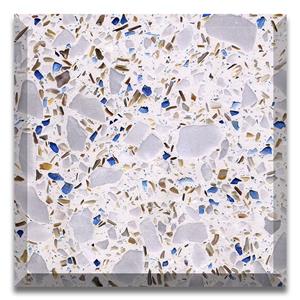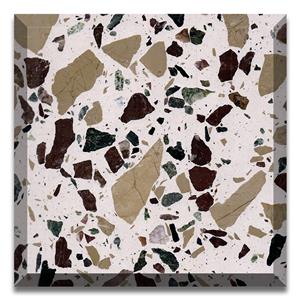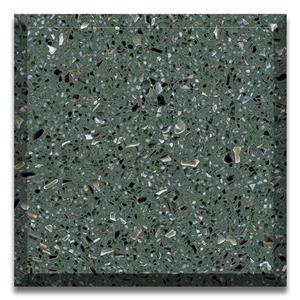
Choose Terrazzo Stone: Color, Aggregate & Finish
Choose Terrazzo Stone: Color, Aggregate & Finish
If you are specifying a surface for a kitchen island, hotel lobby, or bathroom floor, you have probably asked:
what is terrazzo, and why does it appear in so many terrazzo design projects? In simple terms, terrazzo stone
is a composite material made from chips of marble, quartz, granite, glass, or other aggregates bound in cement
or epoxy. The result is a durable, decorative surface that works as terrazzo flooring, wall cladding, and even
furniture. Choosing the right terrazzo stone is less about finding a single “best” product and more about
matching color, aggregate, slab size, and finish to the demands of your space. This guide walks through each
decision so you can specify terrazzo with confidence.
Step 1: Start with Color, Not Just the Background
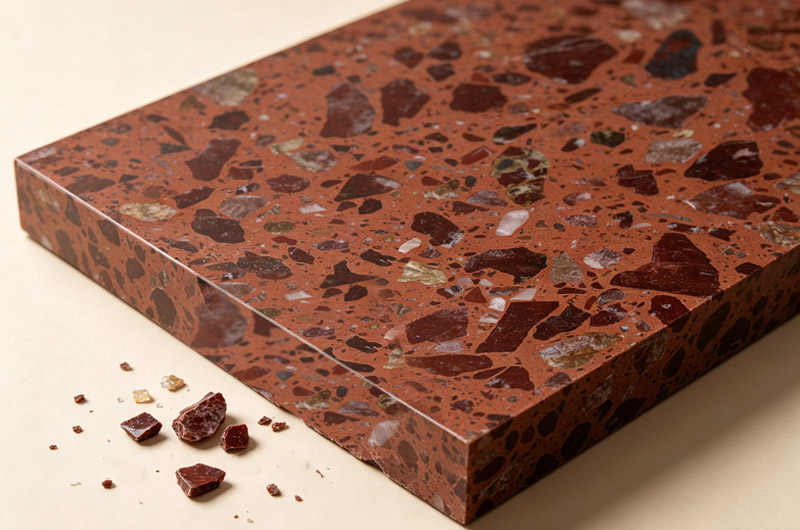
Before choosing color, it helps to clarify what is terrazzo: a composite of chips set in a binder. The color comes
from two layers: the matrix and the visible aggregate. A white or light matrix gives a clean, modern look; a
charcoal or terracotta matrix changes the whole mood. For a small bathroom, lighter colors make the room
feel larger. For a busy restaurant floor, mid-tone colors hide stains better.
When you look at terrazzo design samples, place them on the floor or wall, not on a table, because light
direction changes how the aggregate sparkles. If you want a bold terrazzo stone statement, choose a strong
contrast between matrix and aggregate, such as black matrix with white marble chips. For a quieter surface,
keep matrix and aggregate close in tone.
Step 2: Choose Aggregate Type and Size
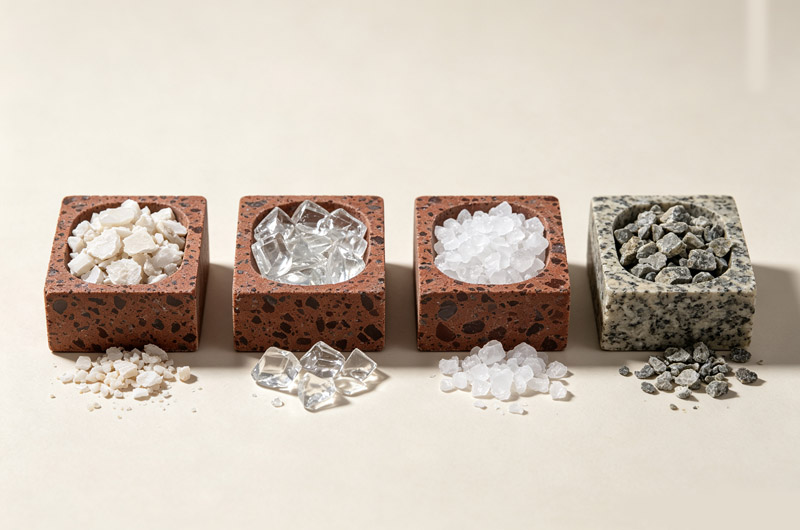
Aggregate is what gives terrazzo its character. Marble chips are classic and soft; glass chips add brightness
and recycled content; quartz and granite increase hardness. The size of the aggregate affects both appearance
and performance.
Small chips, around 1–3 mm, produce a fine, uniform surface that works well in small bathrooms and
minimalist spaces. Medium chips, roughly 3–6 mm, are the most versatile for terrazzo flooring because
they balance visual interest with practical performance. Large chips, 6–12 mm and above, create a bold,
speckled effect, but they can make edges look busy and may require more filler during installation.
For high-traffic terrazzo flooring, avoid very large glass pieces that can chip or become slippery when
polished. If you are buying a precast slab, ask the supplier for a full-size sample, not a 10 cm swatch, because
aggregate distribution changes with scale.
Step 3: Pick the Right Format: Terrazzo Slab vs Tile
Terrazzo is sold as large-format slabs, precast tiles, and site-poured systems. A terrazzo slab is ideal for
kitchen countertops, shower walls, reception desks, and stair treads because it has fewer joints and a more
seamless look. Standard slab sizes are often around 1200 x 2400 mm or larger, but thickness and format
vary by manufacturer.
Tiles are easier to install on floors and walls, especially for residential renovations. If you want a continuous
floor without visible seams, site-poured terrazzo is the traditional choice, but it requires skilled labor and
longer curing time. For most furniture and vanity applications, a 20 mm thick terrazzo slab with a filled,
honed surface works well.
Step 4: Select the Right Surface Finish
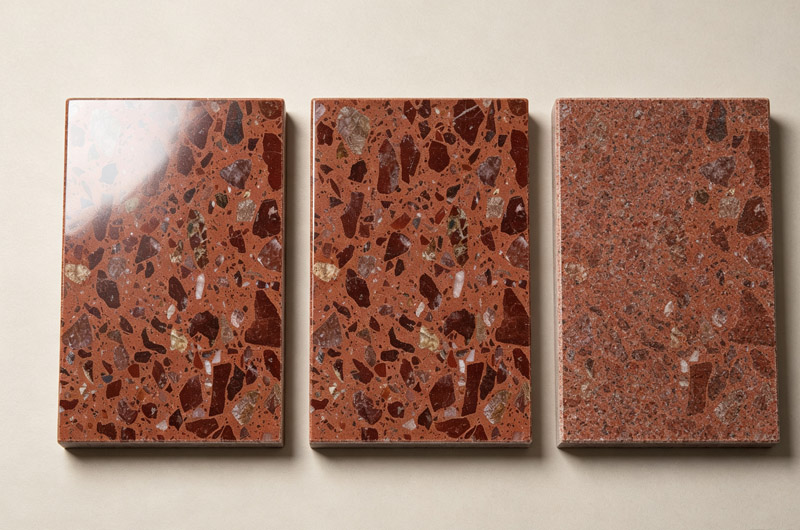
The finish determines how the terrazzo stone feels, reflects light, and resists stains. Polished terrazzo has
a glossy, mirror-like surface that intensifies color and is common in retail and hospitality. Honed terrazzo
has a matte or satin finish with less glare and better slip resistance when dry. It feels softer underfoot but
can show water spots more easily.
Textured or bush-hammered finishes are better for outdoor steps and wet areas because they provide grip.
For terrazzo flooring in a bathroom, choose a honed or leathered finish with a penetrating sealer to reduce
the chance of slipping. For a kitchen countertop, a polished finish is easier to wipe clean, but a honed finish
hides scratches better.
Step 5: Match Terrazzo Design to Your Room
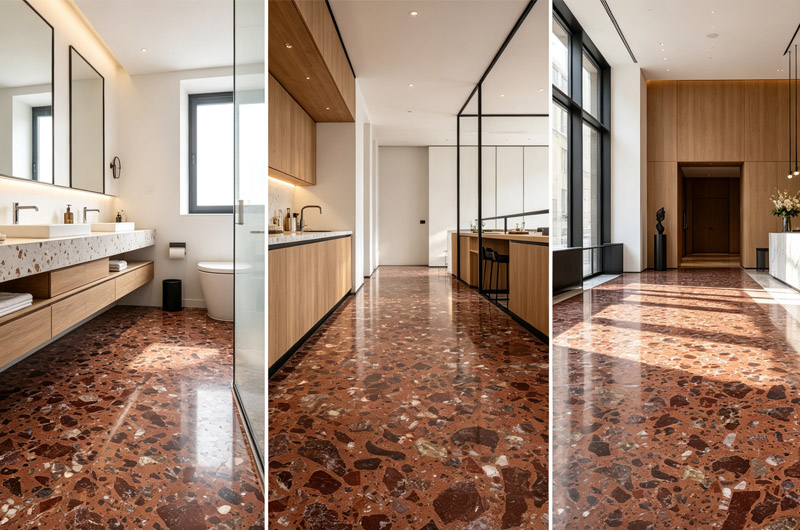
A common mistake is treating terrazzo as a neutral background when it actually carries a lot of visual texture.
In a minimalist room, use a low-contrast terrazzo design with small aggregate and a light matrix. In a retro or
Mediterranean space, choose terrazzo design with larger chips and warmer colors like terracotta, mustard,
and olive.
In a commercial lobby, a large-format terrazzo slab with oversized marble or glass aggregate can become
the focal point. Always consider adjacent materials: terrazzo pairs well with brass, oak, white plaster, and
black steel, but it can clash with busy stone patterns. Order physical samples and view them next to your
cabinet, wall paint, and floor tiles before making a final decision.
Step 6: Don't Ignore Installation and Maintenance
Even the best terrazzo stone will fail if the substrate moves or the sealer is wrong. For site-poured terrazzo,
make sure the contractor uses control joints and a flexible membrane in areas with underfloor heating or
large temperature swings. For precast terrazzo slab installations, use a full-bed mortar and leveling clips to
avoid lippage.
After installation, seal the surface with a breathable penetrating sealer suitable for cement or epoxy terrazzo.
Clean with a pH-neutral cleaner; avoid acidic or abrasive products that can dull the polish. In a residential
kitchen, reseal polished terrazzo every one to three years depending on use. In a commercial setting, schedule
professional maintenance every six to twelve months.
Conclusion
Choosing terrazzo is a balance of color, aggregate, format, and finish. Start by answering what is terrazzo in
your own project terms: is it a decorative floor, a durable countertop, or a sculptural wall? Then use that answer
to narrow the options.
If you prioritize low maintenance and a clean look, choose small marble aggregate in a light matrix with a honed
finish. If you want a statement surface, choose a large-format slab with bold glass chips and a polished finish.
The right stone will not only fit the room today but will keep performing for decades. When in doubt, ask for
full-size samples, specify the finish in writing, and work with a supplier who understands both flooring and design
from slab to installation.