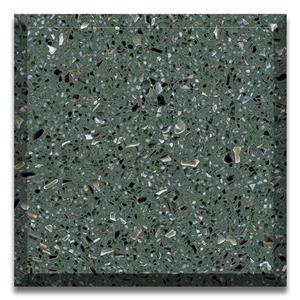
What Is Terrazzo? A Designer's Guide to Terrazzo Flooring

What Is Terrazzo? A Designer's Guide to Terrazzo Flooring
For many architects and interior designers, few materials balance beauty, durability, and long-term value as well as terrazzo.
Although it has been used for centuries, terrazzo has become even more relevant in modern design. Today, terrazzo flooring is commonly found in airports, museums, hotels, and high-end residential spaces.
Its wide visual range, long lifespan, and easy maintenance make it a reliable choice for both large commercial projects and refined private interiors.
But before specifying it for your next project, it's important to understand what terrazzo is, how it is produced, and why it continues to inspire contemporary designers.
A Closer Look at What Terrazzo Really Is
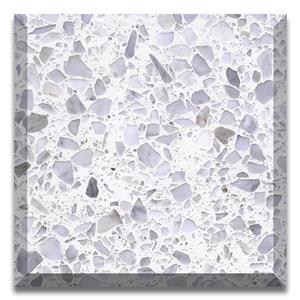
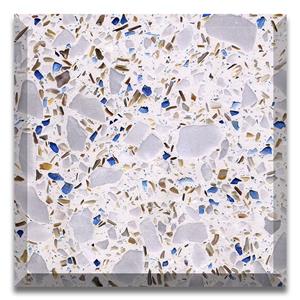
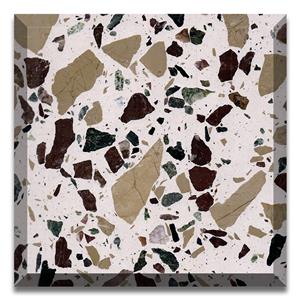
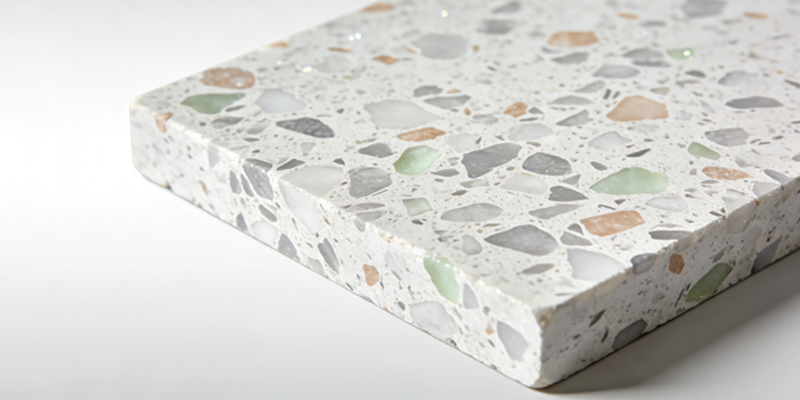
Terrazzo is a composite material made by mixing stone chips—commonly marble, quartz, granite, or recycled glass—into a cement or mineral-based binder. After curing, the surface is ground and polished, revealing a smooth finish and the characteristic multi-speckled appearance. Its charm lies in the natural variation of the aggregates, which creates depth and texture without overwhelming the space.
Unlike synthetic surfaces, terrazzo is primarily made from inorganic materials. This makes it stable, long-lasting, and naturally resistant to heat and wear. Today, designers can choose from poured-in-place systems, precast panels, or terrazzo tiles, depending on project scale and installation needs.
How Terrazzo Evolved Into a Modern Design Essential
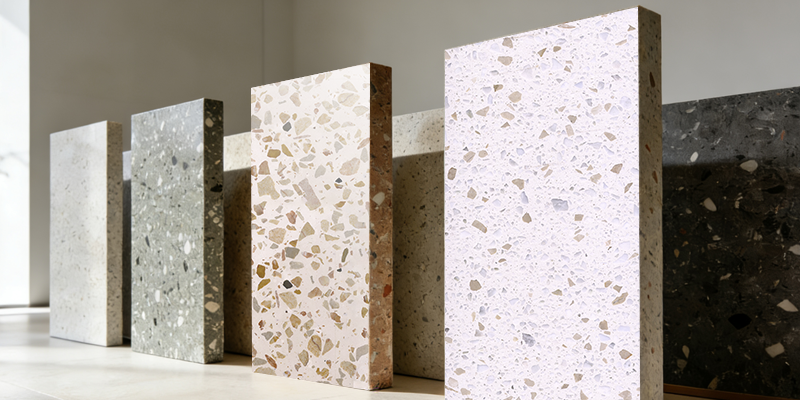
A material once associated with traditional European architecture is now celebrated in global contemporary design. In modern applications, terrazzo appears not only on floors but also on walls, countertops, staircases, and custom furniture pieces. Its adaptability has made it popular among designers working with terrazzo and stone surfaces who want a cohesive and timeless look.
Color selection is another reason for terrazzo’s comeback. By choosing different aggregate sizes or pigments, designers can create soft minimal palettes, bold graphic statements, or perfectly neutral surfaces that blend effortlessly with wood, metal, or concrete. The material also fits well with biophilic and sustainable design concepts due to its mineral-based composition and extremely long lifecycle.
Why Designers Choose Terrazzo for High-Impact Spaces
Beyond aesthetics, terrazzo performs exceptionally well in high-traffic environments. Its dense structure makes it resistant to scratches, stains, and moisture. This is why it is often used in schools, hospitals, retail centers, and hospitality projects that require both visual appeal and practical durability.
Maintenance is also straightforward. Daily cleaning with mild detergents is usually enough to keep the surface looking new. Periodic polishing restores gloss and smoothness, giving the material decades of usable life with minimal upkeep. Designers who want a long-term, low-intervention material often place terrazzo at the top of their shortlist.
Precast Terrazzo and the Rise of Fast Installation
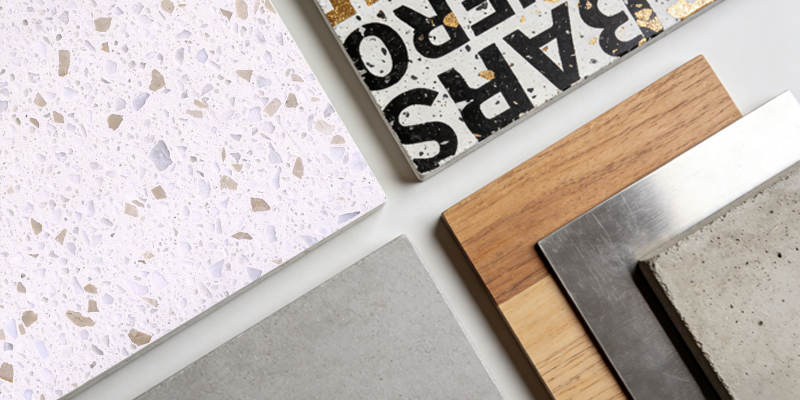
While traditional poured-in-place terrazzo is still widely used, precast terrazzo panels and terrazzo tiles have grown in popularity. They offer predictable quality, smooth installation scheduling, and better color consistency across large projects. For architects working under tight timelines or requiring precise control over patterns, precast elements provide flexibility without sacrificing craftsmanship.
Precast terrazzo is also ideal for vertical surfaces and custom components. Reception desks, tabletops, wall cladding, and interior accents can all be fabricated with consistent patterns and controlled thickness, ensuring clean edges and visual continuity.
The Importance of Choosing the Right Supplier
When specifying terrazzo, selecting trusted partners is essential. Reliable terrazzo & marble supply companies ensure stable material quality, accurate color matching, and strong technical support throughout the project. A consistent supply chain is especially important for large commercial builds where surface uniformity and on-schedule delivery matter.
Professionals working on international projects also benefit from suppliers with strong export experience and in-house production capacity. These partners help ensure that terrazzo elements—from slabs to tiles—arrive safely and meet performance standards.

Terrazzo Design Trends Shaping Today's Market
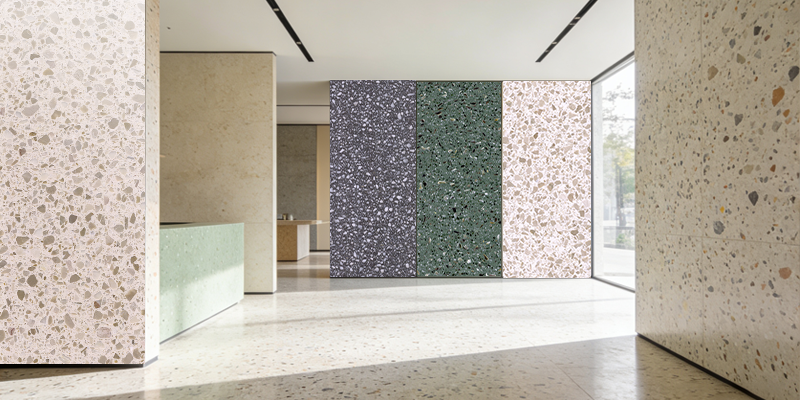
Current terrazzo design trends emphasize clean, modern forms while keeping the classic speckled texture. Designers frequently choose muted stone combinations for minimalist interiors or experiment with larger aggregates to create expressive panels. Soft beige, warm gray, off-white, and light green mixes are particularly popular for hospitality and commercial spaces seeking a calm, modern atmosphere.
Another trend is the use of terrazzo as a statement piece. Many designers integrate custom shapes, metal strips, or geometric layouts to form subtle artwork on floors and walls. This offers creative freedom without compromising durability.
Final Thoughts
Terrazzo has earned its place as one of the most reliable and elegant surface materials available today. From its deep historical roots to its strong presence in contemporary architecture, it delivers the rare combination of style, performance, and longevity. Whether you are working on a commercial lobby, a luxury residence, or a public institution, terrazzo offers endless opportunities for design expression while maintaining the durability needed for everyday use.
Its unique blend of natural aggregates and polished surfaces ensures that terrazzo will remain a favorite among architects and designers for years to come—timeless, practical, and truly distinctive.