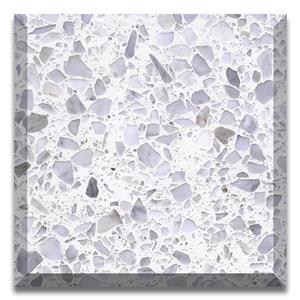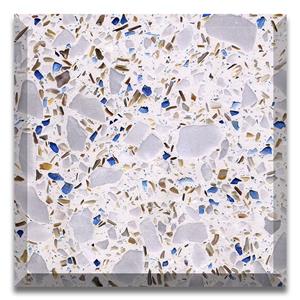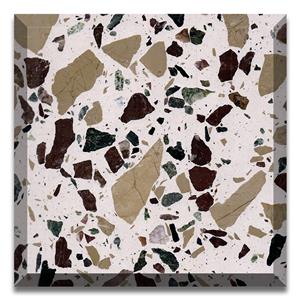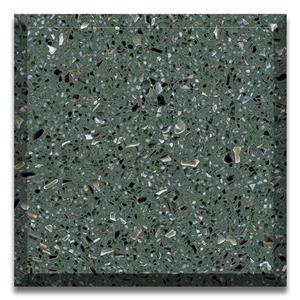
Built to Perform: Fire-Rated 10mm Terrazzo Slabs for Modern Architecture

Built to Perform: Fire-Rated 10mm Terrazzo Slabs for Modern Projects
Introduction
Modern architecture demands materials that go beyond appearance. Strength, safety, and long-term
stability have become essential requirements in both commercial and residential spaces. Among engineered
surface materials, terrazzo continues to stand out due to its durability and design flexibility.
In recent years, thinner construction systems have gained attention as builders aim to reduce structural
load while maintaining performance. This shift has led to the rise of advanced slab formats designed
for efficiency and high-end architectural use.
Understanding the Material
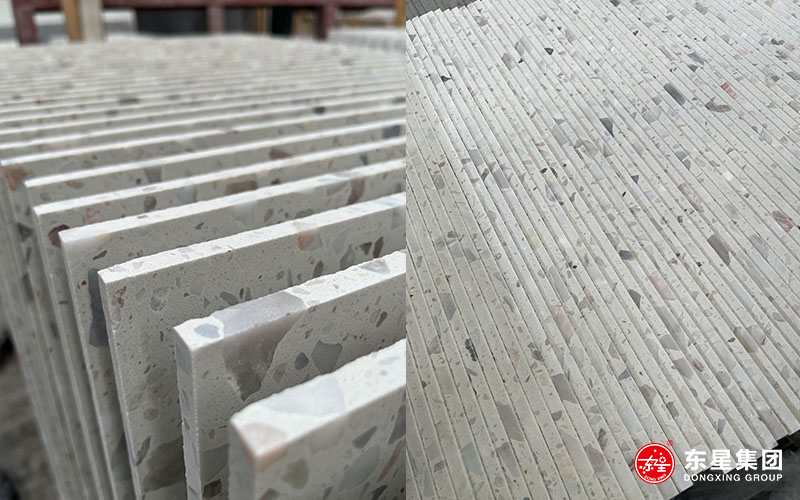
To appreciate its modern applications, it helps to first understand the basics of what is terrazzo.
Traditionally, it is a composite surface made by combining natural stone chips with cement or resin binders.
After curing, the surface is ground and polished to reveal a decorative finish with natural stone fragments
embedded throughout.
Over time, this material has evolved from handcrafted flooring in historical buildings to a highly engineered
solution used in airports, hotels, and commercial developments worldwide.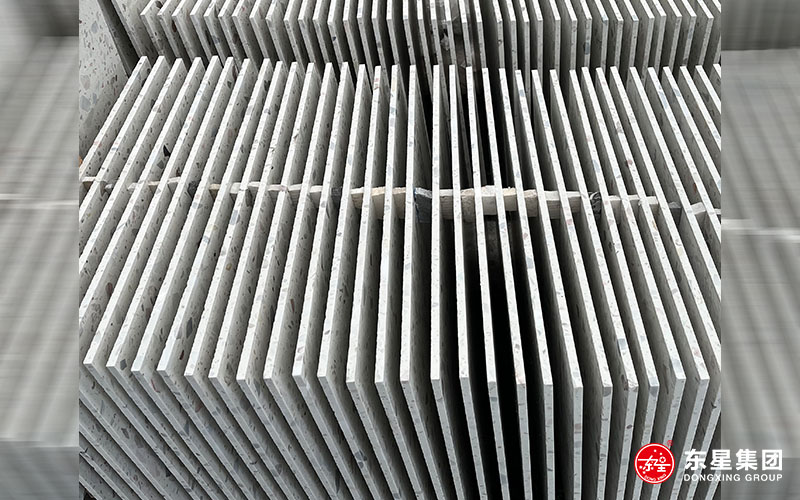
Evolution in Surface Aesthetics
Contemporary terrazzo design has shifted significantly from traditional patterns. Instead of bold and
random aggregates, modern applications focus on minimal tones, refined textures, and large seamless
surfaces.
Architects now prefer subtle visual movement that supports overall spatial design rather than dominating
it. This makes terrazzo a strong choice for projects where continuity and material harmony are key priorities.
As aesthetic expectations evolve, manufacturers have also improved consistency, color control, and
structural performance to meet modern demands.
The Shift Toward Thin Slab Engineering
One of the most significant developments in recent years is the introduction of ultra-thin slab systems.
Among them, 10mm terrazzo represents a major step forward in construction efficiency.
Reducing thickness helps lower transportation cost, reduce structural load, and simplify installation in
both new builds and renovation projects. It also allows better compatibility with modern adhesive
systems and prefabricated wall or floor assemblies.
Despite its reduced thickness, performance remains stable due to advanced compaction technology and
controlled curing processes.
Performance and Safety Standards
In modern construction, fire resistance is a critical requirement. Materials used in public and commercial
environments must comply with strict safety regulations.
High-density engineered terrazzo systems are designed to meet these expectations. They maintain structural
integrity under high temperatures while producing minimal smoke and no toxic emissions during fire exposure.
This makes them suitable for environments such as airports, retail centers, and institutional buildings
where safety compliance is mandatory.
Application in Flooring Systems
In architectural practice, terrazzo flooring is valued for its long service life and visual consistency. Unlike
surface-coated materials, its appearance is embedded within the body of the slab, ensuring long-term
stability even under heavy foot traffic.
This makes it especially effective in high-usage environments where maintenance cost and durability
are key concerns. Over time, the surface retains its polished appearance with minimal degradation
compared to many alternative finishes.
Practical Use in Modern Projects
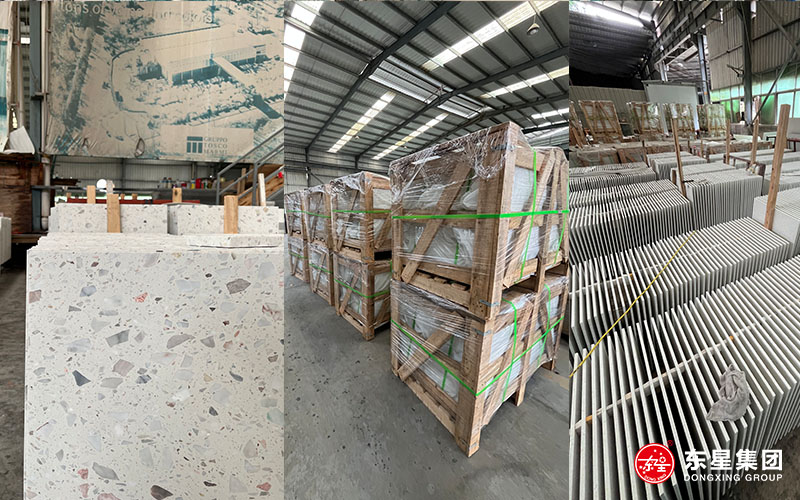
Thin engineered slabs are increasingly used in both new construction and refurbishment projects. Their
reduced weight allows easier handling and faster installation timelines.
Typical applications include:
Commercial entrances and lobbies
Hospitality interiors and feature walls
Office and retail environments
Public transportation hubs
High-end residential spaces
The versatility of this material allows it to integrate into both minimalist and expressive architectural concepts
without visual conflict.

Conclusion
The development of thin engineered surfaces reflects a broader transformation in architectural material
science. Designers today require solutions that combine aesthetics, performance, and construction efficiency.
Modern slab systems provide this balance by reducing thickness while maintaining strength and safety
standards. As a result, they have become an increasingly important option for contemporary building
projects seeking long-term value and design flexibility.