Eco-Friendly Terrazzo the Future of Sustainable Architecture?

Is Eco-Friendly Terrazzo a Sustainable Choice for Modern Architecture?
As sustainability becomes a major focus in global architecture and interior design, more designers,
developers, and contractors are searching for materials that combine aesthetics, durability, and
environmental responsibility. Among today’s most popular choices,it has emerged as a leading
solution for modern commercial and residential projects.
From luxury hotels to shopping malls and public buildings, terrazzo floor systems are increasingly
recognized for their long lifespan, low maintenance requirements, and sustainable manufacturing
process. In particular,it has gained strong attention in Europe and North America due to its
environmentally friendly properties and compatibility with green building standards.
But is terrazzo really sustainable? In this article, we will explore why it is becoming one of the
most preferred materials in modern architecture, how it is produced, and why it supports the
future of eco-conscious construction.
What Is Eco-Friendly Terrazzo?
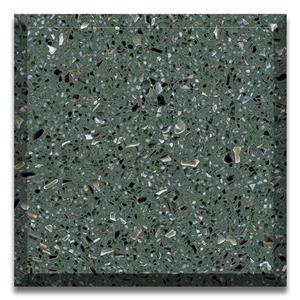
It is a composite material made from natural aggregates such as marble, quartz, granite,
glass, or shells combined with cement-based or inorganic binders. Unlike some traditional
resin-based products,it uses mineral-based materials that significantly reduce environmental impact.
Modern terrazzo floor systems are designed not only for visual beauty but also for sustainability.
Many manufacturers now incorporate:
Recycled marble chips
Recycled stone waste
Low VOC materials
Inorganic binders
Energy-efficient production methods
Because of these features, aligns well with global green building initiatives such as LEED
certification and ESG-focused construction standards.
Why Sustainable Terrazzo Is Growing in Popularity
In recent years, architects and developers have shifted toward materials that contribute to
healthier indoor environments and lower carbon footprints. This trend has significantly
increased demand for terrazzo in commercial architecture.
Several factors explain why terrazzo application continues to expand worldwide:
1. Long Service Life
One of the biggest environmental advantages of terrazzo floor systems is durability. A properly
installed terrazzo surface can last for decades with minimal maintenance.
Unlike materials that require frequent replacement,it reduces long-term waste generation and
conserves natural resources over time.
2. Use of Recycled Marble
Many products contain recycled marble and stone fragments collected during quarrying and
stone processing. Instead of sending these leftover materials to landfills, manufacturers reuse
them as decorative aggregates.
This recycling process helps reduce industrial waste while creating unique visual patterns for
modern interior design.
3. Low VOC Emissions
Indoor air quality is an important consideration in sustainable construction. High VOC
emissions from certain building materials can negatively affect human health.
In contrast, terrazzo manufactured with inorganic materials and cement-based binders generally
produces very low VOC emissions. This makes it a preferred option for schools, hospitals, hotels,
offices, and residential spaces.
4. Low Maintenance Requirements
Another important advantage of terrazzo floor systems is easy maintenance. Terrazzo surfaces
do not require frequent replacement, waxing, or harsh chemical cleaning.
This reduces the environmental impact associated with maintenance products and cleaning
chemicals throughout the material's lifecycle.
The Difference Between Inorganic Terrazzo and Resin Terrazzo
When discussing sustainable terrazzo, it is important to understand the difference between
inorganic terrazzo and resin-based terrazzo systems.
Inorganic Terrazzo
It typically uses cement or other mineral binders. Its main environmental advantages include:
Lower VOC emissions
Better fire resistance
Higher recyclability
Natural mineral composition
Compatibility with green building standards
Because of these characteristics, inorganic terrazzo is often considered a more environmentally
responsible choice.
Resin-Based Terrazzo
Resin terrazzo uses epoxy or resin binders. Although it offers certain design flexibility, some
resin systems may contain higher chemical content and VOC emissions compared to inorganic
alternatives.
As sustainability becomes more important in architecture, many designers are now prioritizing
terrazzo solutions based on inorganic materials.
How Inorganic Terrazzo Supports Sustainable Production
Sustainable manufacturing is becoming a key requirement for modern building materials.
Today's leading terrazzo manufacturers are investing heavily in environmentally responsible
production systems.
A high-quality terrazzo factory may include:
Water recycling systems
Dust collection technology
Energy-saving equipment
Waste reduction programs
Recycled raw materials
By combining recycled marble with efficient manufacturing processes, producers can significantly
reduce environmental impact while maintaining product quality.
Many manufacturers also use vacuum pressing and high-pressure vibration technologies to create
dense, durable slabs with lower material waste.
This approach helps position sustainable terrazzo as an ideal material for future green construction
projects.
Popular Terrazzo Applications in Sustainable Architecture
One reason terrazzo application continues to expand globally is its exceptional versatility. Designers
can use terrazzo in both interior and exterior environments while maintaining a consistent visual style.
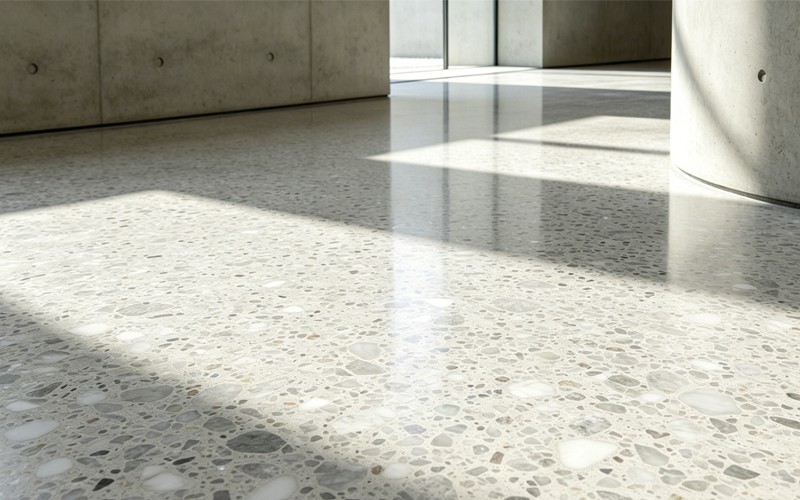
Terrazzo Floor
The most common use is the terrazzo floor, especially in high-traffic commercial spaces such as:
Airports
Shopping malls
Hotels
Museums
Hospitals
Schools
Because terrazzo flooring is highly durable and easy to maintain, it performs well in demanding environments.
Terrazzo Wall Cladding
Architects increasingly use terrazzo for wall applications to create elegant and sustainable interior
spaces. Terrazzo walls offer a modern appearance while supporting environmentally friendly design concepts.
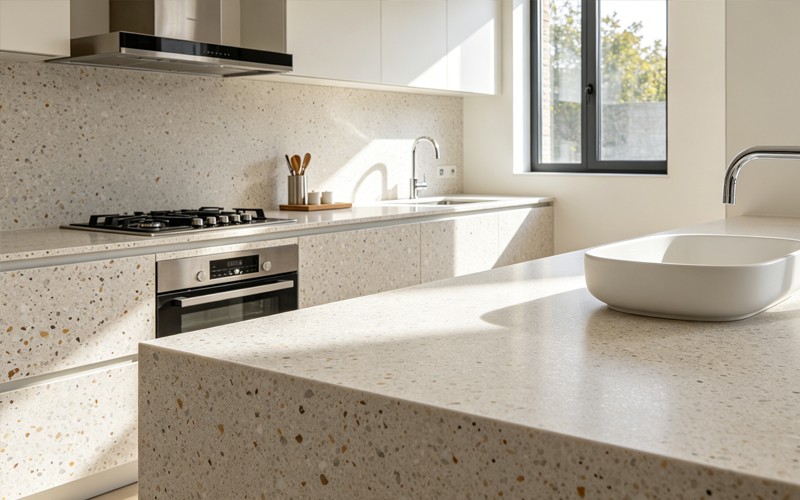
Countertops and Furniture
Modern terrazzo is also widely used in:
Reception desks
Kitchen countertops
Bathroom vanities
Tables
Decorative furniture
Its customizable colors and aggregate combinations make terrazzo suitable for luxury interior projects.
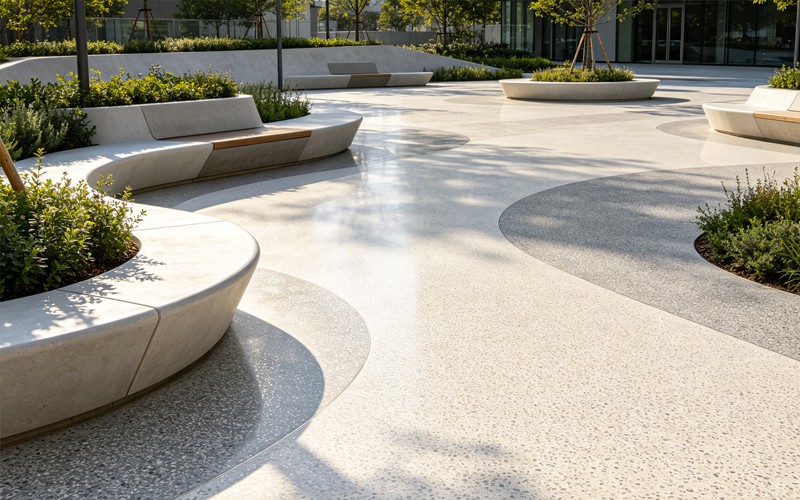
Outdoor Applications
Certain types of terrazzo can also be used outdoors due to their durability and weather resistance.
Outdoor terrazzo application examples include:
Public plazas
Landscape paving
Exterior wall panels
Garden furniture
Why Architects Prefer Eco-Friendly Terrazzo
Architects today must balance aesthetics, performance, and sustainability. This is why it has become
increasingly attractive in modern design.
Design Flexibility
Terrazzo allows nearly unlimited customization options. Designers can select:
Aggregate size
Aggregate color
Surface finish
Slab dimensions
Texture
This flexibility makes sustainable terrazzo suitable for both minimalist and luxury architectural styles.
Compatibility With Green Certifications
Many commercial projects aim to achieve certifications such as LEED or WELL. Materials with recycled
content and low VOC emissions help contribute toward these goals.
Because it often contains recycled marble and environmentally responsible materials, it aligns well with
sustainable building standards.
Timeless Aesthetic
Unlike trend-based materials that quickly become outdated, terrazzo has maintained popularity for
decades. Its timeless appearance reduces the need for future renovation and replacement.
Is Terrazzo Better Than Other Flooring Materials?
When comparing flooring options from a sustainability perspective, terrazzo floor systems offer several
long-term advantages.
| Material | Lifespan | VOC Level | Recycled Content | Maintenance |
|---|---|---|---|---|
| Inorganic Terrazzo | Very Long | Low | High | Low |
| Vinyl Flooring | Medium | Higher | Low | Medium |
| Laminate Flooring | Medium | Medium | Low | Medium |
| Natural Wood | Long | Low | Limited | High |
| Ceramic Tile | Long | Low | Medium | Medium |
Although terrazzo may have a higher initial investment, its longevity and low maintenance often
make it more sustainable over the entire lifecycle of a building.
The Future of Sustainable Terrazzo
As governments and developers continue emphasizing ESG goals and environmentally responsible
construction, demand for sustainable terrazzo is expected to grow rapidly.
Several global trends are driving this market:
Green architecture expansion
Low-carbon construction policies
Increased interest in recycled materials
Demand for healthier indoor environments
Long-term lifecycle cost reduction
In this context,It is no longer simply a decorative material. It has become part of a broader movement
toward sustainable architecture and responsible manufacturing.
Conclusion
So, is terrazzo eco-friendly? The answer is yes — especially when produced using inorganic materials and
sustainable manufacturing methods.
With its use of recycled marble, low VOC emissions, exceptional durability, and versatile design possibilities,
inorganic terrazzo has become one of the most promising materials for modern green construction.
From commercial terrazzo floor systems to large-scale architectural terrazzo application projects,
sustainable terrazzo continues to support the growing global demand for environmentally responsible
building materials.
As architects and developers increasingly prioritize ESG principles and sustainable design,it is positioned
to play a major role in the future of architecture.