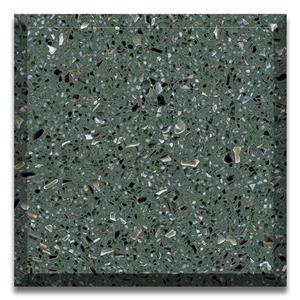
Is Terrazzo Fire Resistant? A Complete Guide to Fire-Safe Terrazzo Flooring

Is Terrazzo Fire Resistant? Everything You Should Know
Introduction
Fire safety has become one of the most important considerations in modern architecture. Whether designing
a commercial office, airport, hospital, shopping mall, or luxury hotel, architects and developers must select
materials that not only deliver outstanding aesthetics but also comply with strict fire safety regulations.
Among today's popular decorative materials, terrazzo has earned an excellent reputation for its durability,
sustainability, and timeless appearance. However, many project owners still ask an important question:
Is terrazzo fire resistant?
The answer depends on the type of it being used. Modern cement-based precast terrazzo offers excellent
fire performance because it is manufactured primarily from natural stone aggregates and inorganic cement.
Unlike resin-based materials, it contains no highly combustible organic binders, making it a preferred building
material for projects where fire safety is a priority.
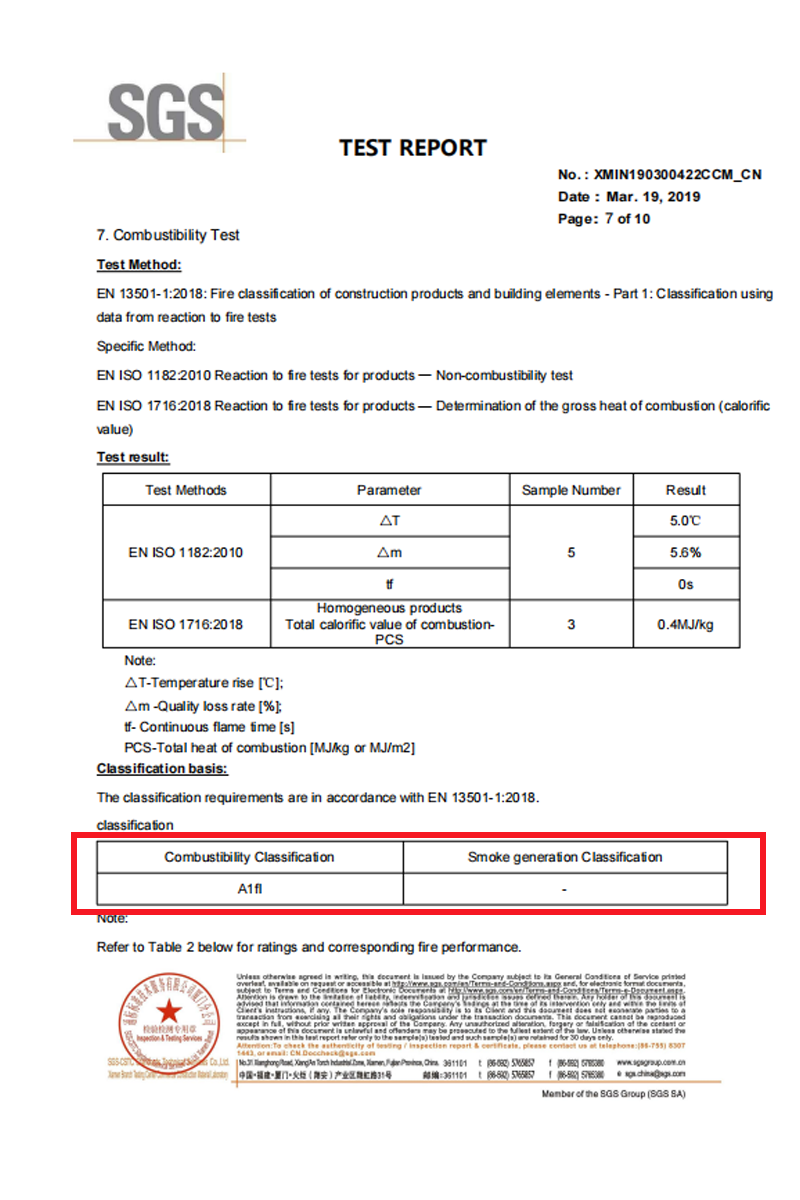
At Dongxing Group, our precast inorganic terrazzo has achieved the A1fl fire classification, one of the highest
fire performance ratings for flooring materials under European standards. This makes it an ideal choice for
demanding architectural applications requiring both beauty and safety.
This guide explains why it performs so well in fire situations, how fire ratings work, and why more architects
are choosing precast terrazzo for modern buildings.
What Makes Terrazzo Fire Resistant?
To understand why it performs well during fire exposure, it's important to first understand how it is made.
Traditional cement-based terrazzo consists primarily of:
Natural marble aggregates
Granite chips
Quartz or recycled stone
White cement
Mineral pigments
Water
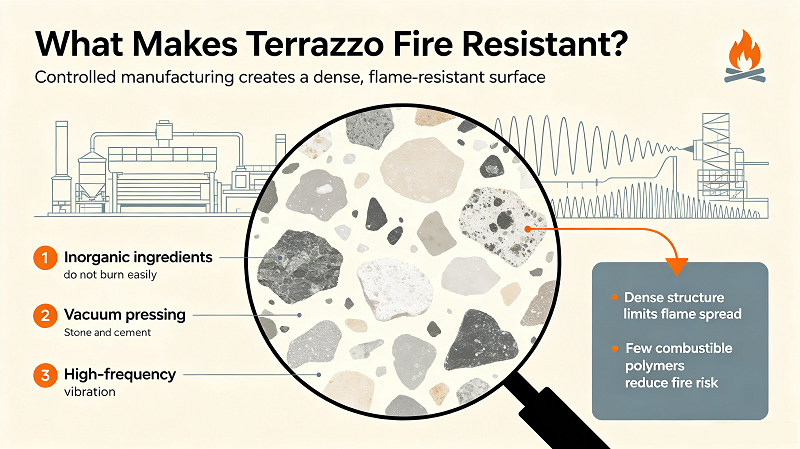
These ingredients are inorganic by nature. Since natural stone and cement do not burn under normal fire
conditions, the finished product demonstrates excellent resistance to flame spread.
It is manufactured under controlled factory conditions using vacuum pressing and high-frequency vibration.
This process creates a dense internal structure with minimal air pockets, improving both mechanical strength
and fire performance.
Unlike many synthetic decorative materials, it does not rely on large amounts of combustible polymers.
This significantly reduces the risk of rapid flame spread when exposed to high temperatures.
Understanding Fire Ratings for Flooring Materials
Many people assume that all stone products automatically meet the same fire standards. In reality, every
flooring product must be tested according to recognized fire classification systems.
In Europe, flooring materials are commonly evaluated under EN 13501-1, which classifies products
according to their reaction to fire.
For flooring, the classifications include:
A1fl
A2fl
Bfl
Cfl
Dfl
Efl
Ffl
Among these ratings, A1fl represents the highest level of fire performance.
A flooring product with an A1fl classification is considered non-combustible and contributes very little
to fire growth. It also demonstrates excellent performance in terms of flame spread and heat release.
For architects working on airports, hospitals, schools, government buildings, metro stations, and commercial
complexes, selecting an A1fl-rated flooring solution helps meet increasingly strict building safety requirements.
At Dongxing Group, our inorganic terrazzo has successfully achieved the A1flfire classification, providing
customers with confidence for projects requiring high fire safety standards.
Does Terrazzo Produce Smoke During a Fire?
One of the biggest concerns during a building fire is not only the flame itself but also the smoke produced
by burning materials.
Dense black smoke significantly reduces visibility during evacuation and may contain harmful gases released
from burning synthetic materials.
This is one reason why inorganic terrazzo performs exceptionally well.
Because cement-based terrazzo contains natural stone and inorganic binders rather than organic resins,
it does not generate large quantities of black smoke when exposed to fire.
During fire exposure, high-quality inorganic terrazzo typically demonstrates:
No visible black smoke
No irritating odor caused by burning resin
No flaming droplets
Stable structural performance under high temperatures
These characteristics make terrazzo particularly suitable for public buildings where safe evacuation is
a critical design consideration.
Of course, actual fire performance always depends on the product formulation and certified test results.
Architects should always verify fire classifications provided by the manufacturer before specifying materials
for safety-critical projects.
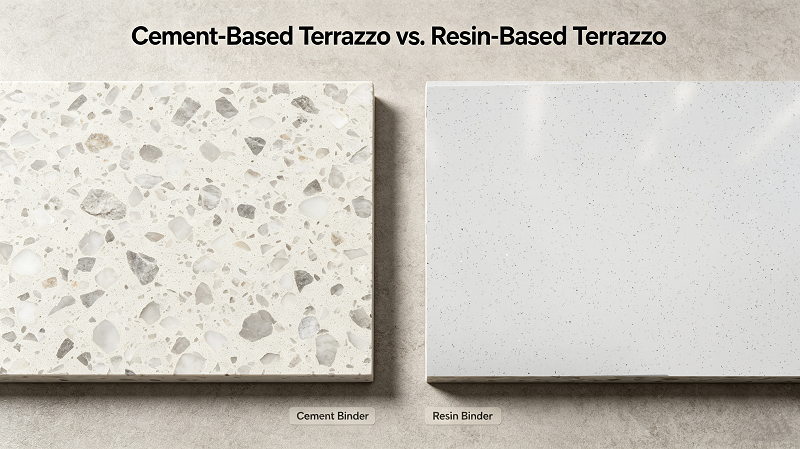
Cement-Based Terrazzo vs. Resin-Based Terrazzo
Not every terrazzo product offers the same fire performance.
The biggest difference lies in the binder.
Cement-Based Terrazzo
Cement-based terrazzo uses inorganic cement as the primary binding material.
Advantages include:
Excellent fire resistance
Low smoke generation
High temperature stability
Excellent durability
Long service life
These properties make cement terrazzo suitable for large-scale public buildings where strict fire regulations apply.
Resin-Based Terrazzo
Resin or epoxy terrazzo uses polymer resin instead of cement.
While resin terrazzo offers certain advantages such as faster curing and vibrant colors, organic resins may
soften or degrade under high temperatures. Depending on the formulation, they may also produce more
smoke than cement-based alternatives during combustion.
For projects where fire safety is a primary concern, many architects prefer inorganic terrazzo because of its
non-combustible composition and proven fire performance.
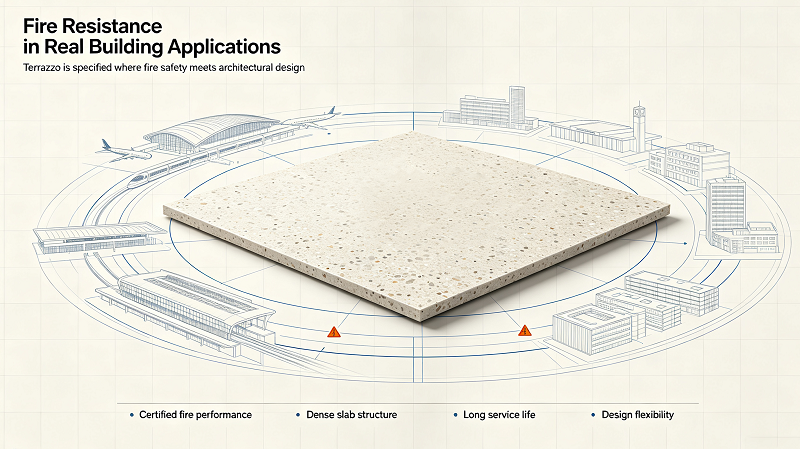
Fire Resistance in Real Building Applications
Fire-resistant materials are no longer limited to industrial facilities or specialized buildings. Today, they are
a standard requirement in many public and commercial projects. As building codes continue to evolve,
architects increasingly specify materials that combine safety, durability, and design flexibility.
This is where terrazzo stands out.
Thanks to its excellent fire performance and long service life, terrazzo is widely used in projects where both
aesthetics and safety are essential.
Common terrazzo applications include:
Airports
Railway and metro stations
Hospitals
Hotels
Shopping malls
Schools and universities
Office buildings
Museums
Government buildings
Residential developments
These projects often require flooring materials that can withstand heavy daily traffic while complying with
strict fire regulations. A high-quality terrazzo slab provides both structural reliability and architectural
appeal, making it a preferred solution for designers around the world.
Why Architects Prefer Fire-Rated Terrazzo Flooring
Architects rarely choose a material based on appearance alone. Every specification must balance safety,
performance, maintenance, sustainability, and long-term value.
A fire-rated terrazzo flooring system offers several advantages beyond its decorative appearance.
1. Enhanced Occupant Safety
During an emergency, every second matters.
Materials that do not significantly contribute to fire growth help create a safer environment for occupants
and emergency responders. Flooring with a high fire classification reduces the likelihood of accelerating a
fire or producing excessive smoke.
2. Long-Term Durability
Fire resistance is only one part of terrazzo's
overall performance.
Because cement-based terrazzo is extremely durable, it maintains its appearance even after decades of
heavy use. Many terrazzo floors installed several decades ago remain in service today with minimal restoration.
3. Low Maintenance
Compared with many decorative flooring materials, terrazzo requires relatively simple maintenance.
Routine cleaning and periodic polishing can keep the surface looking attractive for many years, reducing
life-cycle costs for building owners.
4. Sustainable Construction
Modern construction increasingly emphasizes environmentally responsible materials.
Precast terrazzo often incorporates recycled natural stone aggregates while offering an exceptionally
long service life. This reduces replacement frequency and minimizes material waste over the life of a building.
Does Fire Resistance Limit Design Options?
A common misconception is that highly fire-resistant materials offer limited design possibilities.
Fortunately, this is not the case with modern terrazzo.
Today's manufacturing technology allows designers to create an almost unlimited range of colors,
aggregate combinations, and finishes without sacrificing fire performance.
Available options include:
White terrazzo
Black terrazzo
Grey terrazzo
Green terrazzo
Beige terrazzo
Custom color blends
Large decorative aggregates
Fine aggregate patterns
Surface finishes may include:
Polished
Honed
Leathered
Brushed
Sandblasted
Back-grooved finishes for improved installation performance
Large-format slabs also provide greater design flexibility by reducing visible joints and creating cleaner,
more contemporary interiors.
This combination of safety and creative freedom explains why terrazzo continues to be one of the most
popular architectural materials for premium commercial spaces.
Choosing the Right Terrazzo Manufacturer
Not every manufacturer produces terrazzo with the same level of quality.
Even if two products appear similar, differences in raw materials, production equipment, curing processes,
and quality control can significantly affect performance.
When selecting a terrazzo manufacturer, consider the following factors:
Certified Fire Performance
Always request official fire test reports from an accredited laboratory.
A verified A1fl classification provides confidence that the flooring has been independently tested according
to recognized standards.
Advanced Manufacturing Technology
Look for manufacturers using modern production methods such as:
Vacuum pressing
High-frequency vibration
Hydraulic compression
Controlled curing
Multi-stage polishing
These technologies produce denser, stronger slabs with more consistent quality.
Stable Raw Materials
High-quality natural aggregates and premium white cement contribute to better strength, color consistency,
and long-term durability.
Strict Quality Control
Professional manufacturers inspect every batch for:
Dimensions
Flatness
Surface quality
Color consistency
Water absorption
Mechanical strength
Consistent quality is particularly important for large commercial projects where hundreds or thousands
of square meters are installed.
Frequently Asked Questions
Is terrazzo completely fireproof?
No material should be described as completely fireproof. However, high-quality cement-based terrazzo
with an A1fl fire classification is considered non-combustible under European testing standards and
offers outstanding fire performance for flooring applications.
Does terrazzo release toxic gases during a fire?
Inorganic cement-based terrazzo contains no large quantities of combustible resin. During fire exposure,
it does not typically produce dense black smoke or the strong irritating odor commonly associated
with burning polymer-based materials.
Can terrazzo be used in high-rise buildings?
Yes.
Its excellent durability, fire performance, and low maintenance make terrazzo suitable for many types
of high-rise residential and commercial buildings.
Is terrazzo suitable for public buildings?
Absolutely.
Many airports, hospitals, schools, transportation hubs, hotels, and government buildings use terrazzo
because it combines durability, safety, and long-term value.
Conclusion
Fire safety is no longer an optional consideration in modern architecture—it is a fundamental requirement.
When selecting a building material, architects must evaluate not only appearance but also long-term
performance, maintenance requirements, sustainability, and compliance with fire regulations.
High-quality cement-based terrazzo successfully meets these demands. Its inorganic composition,
exceptional durability, low maintenance requirements, and excellent fire performance make it one
of the most reliable flooring solutions available today.
With an A1fl fire classification, Dongxing Group's precast inorganic terrazzo provides outstanding
resistance to fire while maintaining the timeless beauty of natural stone. During fire exposure, it produces
no visible black smoke and no irritating odor caused by burning resin, helping create safer indoor
environments for commercial and public buildings.
Whether you are designing an airport, hospital, hotel, office tower, educational facility, or luxury residential
development, choosing the right terrazzo solution means investing in a material that delivers safety,
durability, and lasting architectural value.
As an experienced terrazzo manufacturer, Dongxing Group is committed to supplying premium precast
terrazzo products that meet international quality standards and help architects bring safe, sustainable,
and beautiful spaces to life.