Why 10mm Inorganic Terrazzo Is Transforming Modern Terrazzo Design

Terrazzo Design: How 10mm Inorganic Terrazzo
Is Transforming Modern Architecture
As architects and designers continue to search for materials that combine aesthetics, performance,
and sustainability, inorganic terrazzo is attracting renewed attention. While traditional terrazzo
flooring has long been valued for its durability and timeless appearance, recent innovations have
led to the development of thinner and lighter terrazzo products.
Among them, the 10mm terrazzo slab is becoming one of the most discussed solutions in
contemporary architecture and interior design. It offers many of the visual and functional benefits
of traditional terrazzo while opening new possibilities for walls, furniture, retail spaces, and modern
commercial interiors.
Today, more designers are incorporating thin terrazzo panels into their projects as part of a broader
movement toward sustainable materials and flexible terrazzo design solutions.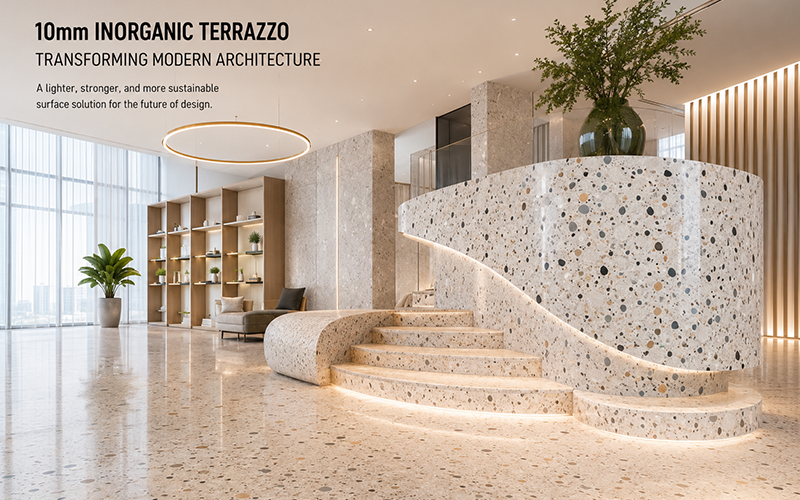
What Is 10mm Inorganic Terrazzo?
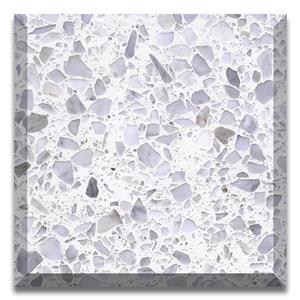
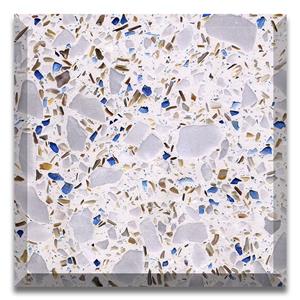
10mm inorganic terrazzo is a lightweight terrazzo panel made from natural stone aggregates, recycled
marble chips, and mineral-based binders. It is designed to deliver the visual appeal of traditional terrazzo
while offering greater flexibility for modern construction projects.
Natural and Mineral-Based Composition
Unlike epoxy terrazzo, which relies on resin systems as its primary binder, inorganic terrazzo uses
cement-based materials and other mineral components. This composition gives the material a more
natural appearance and supports a wide range of architectural applications.
In addition, the use of recycled marble and stone aggregates helps maximize resource efficiency while
maintaining the unique texture that terrazzo is known for.
Enhanced Performance Characteristics
The mineral-based structure of inorganic terrazzo provides several practical benefits. These include
excellent fire resistance, dimensional stability, and long-term durability, making it suitable for both
residential and commercial environments.
These characteristics have contributed to the growing popularity of inorganic terrazzo in contemporary
architecture and interior design.
Designed for Modern Applications
One of the key innovations of 10mm inorganic terrazzo is its reduced thickness. By creating thinner
terrazzo slabs, manufacturers can significantly lower overall weight while maintaining visual quality
and structural performance.
As a result, designers can use terrazzo in applications where traditional 20mm or 30mm panels may
be less practical, including wall cladding, furniture, decorative features, and lightweight interior systems.
How Does It Compare with Traditional 20mm and 30mm Terrazzo?
Traditional terrazzo systems are often produced in thicknesses of 20mm or 30mm. These products
remain highly suitable for heavy-duty public spaces and large-scale terrazzo flooring projects.
However, the construction industry is changing. Modern projects increasingly prioritize efficiency,
lighter structures, and faster installation.
Compared with traditional terrazzo, a 10mm terrazzo slab offers several advantages:
· Reduced overall weight
· Lower transportation costs
· Easier handling during installation
· Greater flexibility for vertical applications
· Better compatibility with prefabricated construction methods
While thicker terrazzo remains essential for certain flooring applications, thinner panels expand
the range of design possibilities available to architects.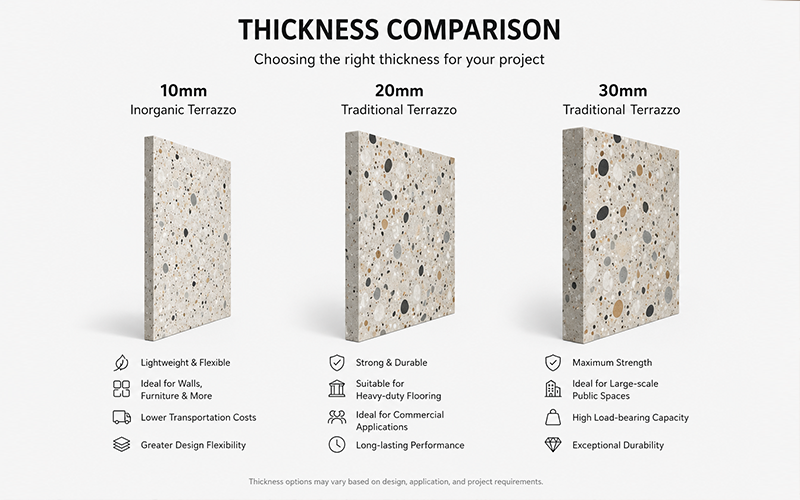
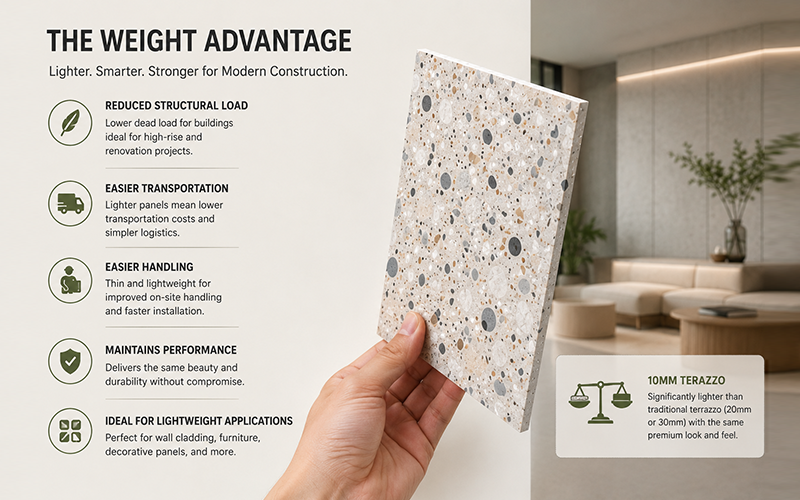
The Weight Advantage
The Weight Advantage
One of the most significant advantages of 10mm inorganic terrazzo is its reduced weight compared
with traditional terrazzo panels.
Reduced Structural Load
In modern construction, every kilogram matters. Lightweight materials help reduce structural
loads, making them particularly beneficial for high-rise buildings, renovation projects, and large
commercial developments.
By lowering the overall dead load of a building, architects and engineers can achieve greater
design flexibility while improving construction efficiency.
Easier Transportation and Handling
A thinner terrazzo slab is also easier to transport and handle on site. Reduced weight can help
lower transportation costs and simplify logistics, especially for projects involving large-format
panels or long-distance shipping.
For contractors, lighter materials often translate into faster installation and improved productivity.
Maintaining Performance Without Compromise
Although the thickness is reduced to 10mm, a high-quality inorganic terrazzo slab still delivers
the visual appeal and durability that designers expect from terrazzo.
It offers an effective balance between aesthetics, performance, and practicality, making it suitable
for a wide range of contemporary applications.
Ideal for Lightweight Applications
The lightweight nature of 10mm terrazzo makes it particularly suitable for wall cladding, custom
furniture, decorative panels, retail interiors, and hospitality projects where reducing weight is
an important design consideration.
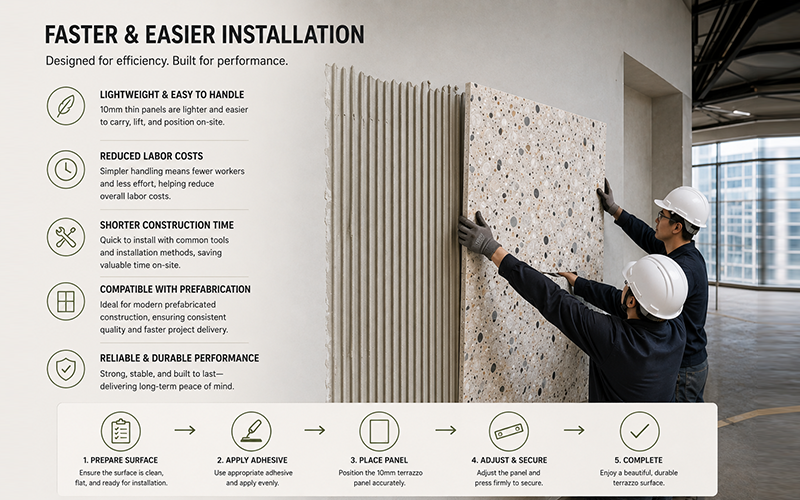
Faster and Easier Installation
Installation efficiency has become a major consideration for developers and contractors.
Traditional terrazzo systems can require more labor, longer installation periods, and greater
structural support. Thin terrazzo panels simplify the process.
Because the slabs are lighter and easier to handle, installers can work more efficiently and reduce
on-site labor requirements.
For commercial projects with tight construction schedules, this can lead to measurable savings
in both time and cost.
As prefabrication continues to gain popularity, lightweight terrazzo products are becoming
increasingly compatible with modern construction methods.
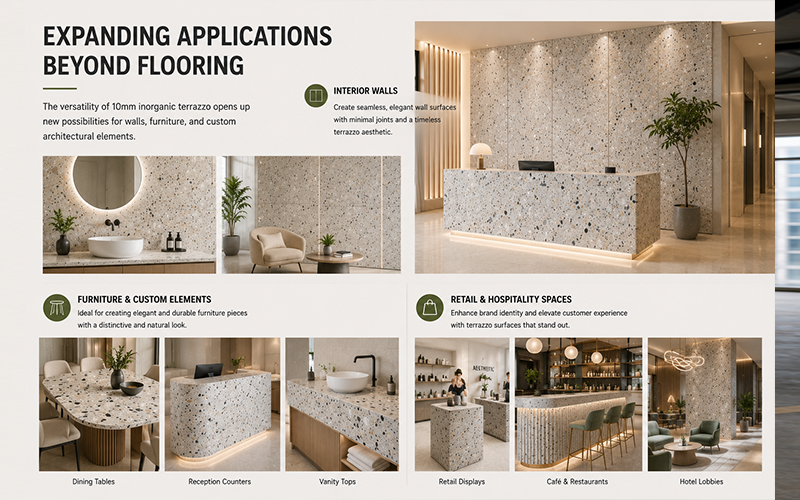
Expanding Applications Beyond Flooring
Historically, terrazzo was primarily associated with floors. Today, designers are using terrazzo
in far more creative ways.
The development of thin terrazzo panels has helped transform terrazzo from a flooring material
into a versatile architectural surface.
Interior Walls
Large-format terrazzo slabs can create seamless wall surfaces with minimal joints.
Hotels, offices, retail stores, and luxury residential projects increasingly use terrazzo wall cladding
to add texture and visual interest without overwhelming a space.
The lighter weight of 10mm panels makes wall installation much more practical than traditional
thick terrazzo products.
Furniture and Custom Elements
Furniture designers are also exploring the potential of terrazzo.
Reception counters, dining tables, shelving systems, vanity tops, and custom cabinetry can all benefit
from the distinctive appearance of terrazzo.
The reduced thickness allows for cleaner detailing and more contemporary furniture designs while
maintaining durability.
Retail and Hospitality Spaces
Retail brands and hospitality designers often seek materials that communicate quality while remaining
durable enough for daily use.
A 10mm terrazzo slab provides both.
Its natural appearance, customizable aggregate combinations, and contemporary aesthetic make it
particularly attractive for boutique hotels, restaurants, cafés, and luxury retail environments.
As consumer expectations continue to evolve, terrazzo remains relevant because it combines
functionality with strong visual identity.
Sustainability and ESG Considerations
Sustainability is no longer a niche topic within architecture. Today, it has become a key consideration
for developers, designers, and building owners when selecting construction materials.
Recycled and Natural Materials
One of the biggest advantages of inorganic terrazzo is its use of recycled and natural resources.
Many terrazzo products incorporate recycled marble chips, reclaimed stone aggregates, and other
mineral-based materials, helping reduce the demand for newly extracted raw materials.
Lower VOC Emissions
Compared with many resin-based alternatives, inorganic terrazzo typically contains lower levels of
volatile organic compounds (VOCs). This contributes to healthier indoor environments and aligns
with the growing demand for low-emission building materials.
Long-Term Durability
Durability is another important aspect of sustainable design. Rather than replacing flooring or surface
materials every few years, building owners can invest in terrazzo surfaces that are designed to perform
for decades with proper maintenance.
Supporting ESG and Green Building Goals
As ESG requirements continue to influence the construction industry, architects and developers are
increasingly seeking materials that combine environmental responsibility with long-term performance.
Inorganic terrazzo offers a practical balance between sustainability, durability, and architectural aesthetics,
making it a valuable option for modern building projects.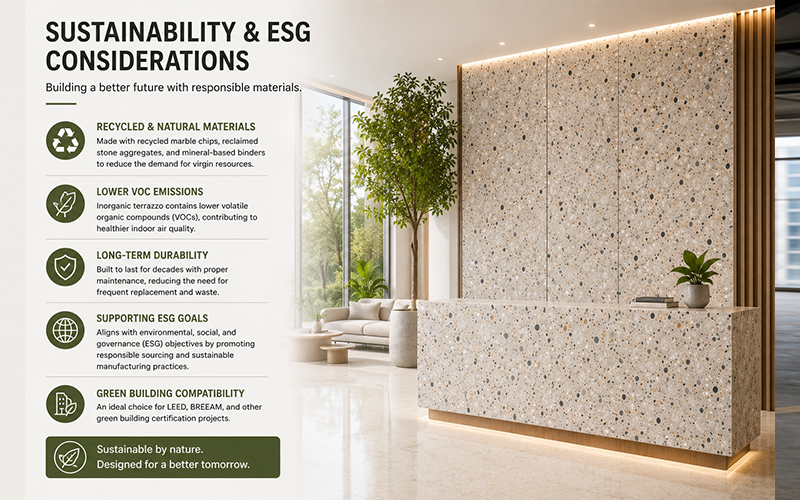
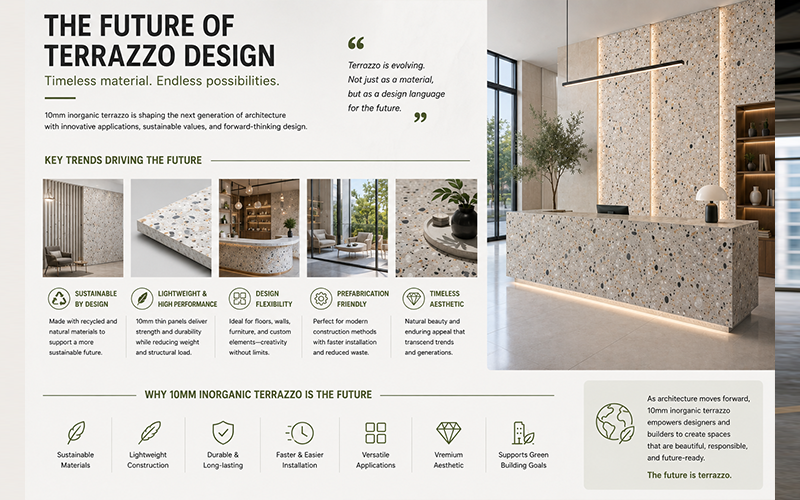
The Future of Terrazzo Design
The growing popularity of thin terrazzo products reflects broader trends within the construction industry.
Architects are seeking materials that are:
· Sustainable
· Lightweight· Durable
· Flexible
· Visually distinctive
The 10mm terrazzo slab addresses all of these requirements while preserving the timeless appeal that has
made terrazzo popular for generations.
As modern architecture continues to embrace prefabrication, sustainable construction, and multifunctional
design, thin inorganic terrazzo is likely to play an increasingly important role.
Rather than replacing traditional terrazzo, it expands what terrazzo can achieve.
From contemporary wall systems to custom furniture and next-generation commercial interiors, 10mm
inorganic terrazzo is helping redefine the future of architectural materials.