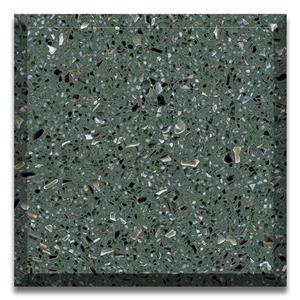
Can Terrazzo Flooring Be Used Outdoors? A Guide for Exterior Projects

Can Terrazzo Flooring Be Used Outdoors?
When architects and developers begin planning an outdoor project, one of the first questions they ask is
not about color or pattern—it is whether the material will continue to perform after years of exposure to
rain, sunlight, temperature changes, and heavy foot traffic. This is whyterrazzo flooring has become an
increasingly discussed solution for modern exterior applications.
Many people still believe terrazzo is only suitable for indoor spaces such as hotel lobbies, shopping malls,
and office buildings. While that may have been true decades ago, manufacturing technology has changed
significantly. Today's terrazzo products, especially high-quality inorganic systems, are designed to perform
well in a much wider range of environments.
However, not every terrazzo slab is suitable for outdoor use. The long-term performance of an exterior
surface depends on several factors, including raw materials, manufacturing methods, water absorption,
structural density, installation techniques, and maintenance. Understanding these factors helps designers
specify the right material instead of simply choosing a beautiful surface.
One misconception in the construction industry is that outdoor performance depends mainly on the stone
itself. In reality, the manufacturing process often has a much greater influence on durability than the
decorative aggregates visible on the surface.
Outdoor Performance Starts Inside the Factory
From our experience, successful exterior projects usually begin long before installation. They begin
inside a professional manufacturing facility where every production step is carefully controlled.
A high-quality terrazzo slab is not simply a mixture of cement and stone chips. It is the result of
precise material selection, controlled proportions, vibration forming, hydraulic pressing, curing,
and multiple polishing processes.
If these steps are inconsistent, problems may appear after installation. Surface cracking, uneven color,
excessive water absorption, or reduced strength often originate during manufacturing rather than on
the construction site.
For this reason, experienced architects rarely evaluate terrazzo based only on appearance. They also
pay close attention to the production capabilities of the supplier, because consistency becomes
increasingly important in large commercial projects.
Why Material Composition Matters
Outdoor environments expose building materials to conditions that rarely exist indoors. Rainwater,
ultraviolet radiation, dust, temperature fluctuations, and continuous pedestrian traffic all place
additional stress on the finished surface.
A well-manufactured terrazzo product minimizes these risks by combining carefully selected natural
aggregates with a stable inorganic cement-based binder. This structure provides excellent dimensional
stability while maintaining the decorative appearance expected from premium architectural finishes.
Compared with many traditional paving materials, modern terrazzo flooring offers designers greater
flexibility in color, aggregate size, and finish without sacrificing long-term reliability.
For projects located in public squares, commercial streets, landscape areas, or transportation hubs,
this balance between appearance and performance becomes particularly valuable.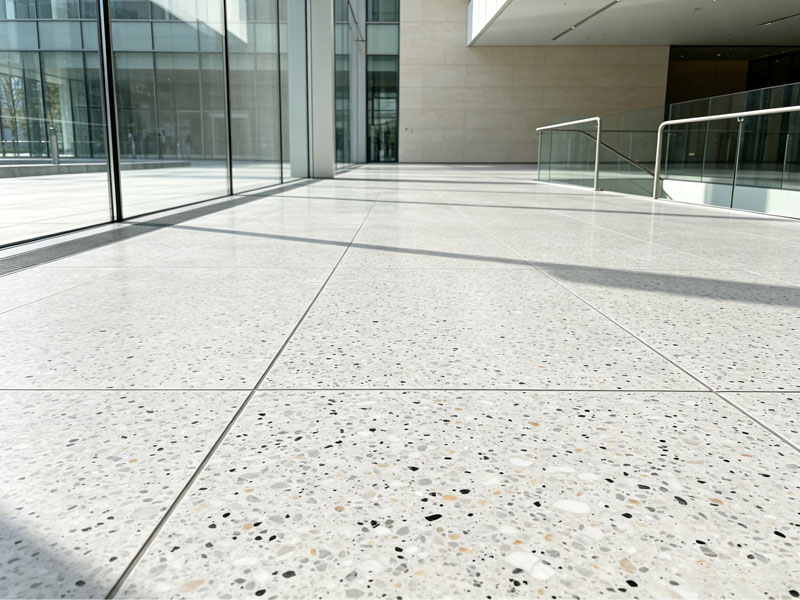
Designing Outdoor Spaces with Terrazzo
Exterior architecture is no longer focused only on structural function. Public spaces are expected
to create memorable visual experiences while remaining easy to maintain throughout their service life.
This is one reason why terrazzo design has become increasingly popular among landscape architects
and commercial developers. Unlike many natural stones that have fixed colors and patterns, terrazzo
allows designers to create customized surfaces by adjusting aggregate combinations, pigments, and
finishing techniques.
Large-format slabs can produce a clean and continuous appearance, while smaller modules allow
greater flexibility for paving layouts. Different surface finishes can also improve slip resistance
without compromising the overall visual quality.
Rather than forcing designers to adapt their concepts to available materials, terrazzo provides a
wider range of creative possibilities while maintaining practical performance.
Selecting the Right Terrazzo Slab
Choosing an outdoor terrazzo product should never be based on appearance alone.
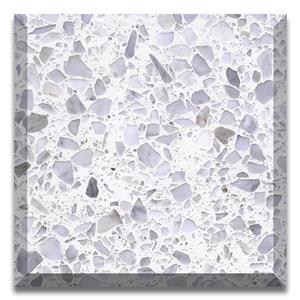
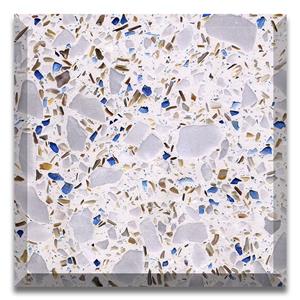
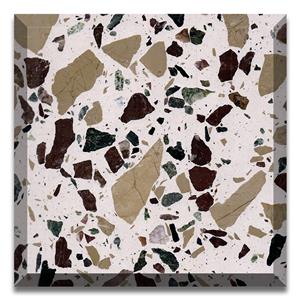
A reliable terrazzo slab should demonstrate consistent density, low water absorption, stable
compressive strength, and accurate dimensional tolerances. These technical characteristics directly
affect installation quality and long-term durability.
Another important consideration is manufacturing consistency. Large developments often require
hundreds or even thousands of slabs. Variations in color, thickness, or surface finish can interrupt
the overall visual effect and increase installation time.
This is why many project teams prefer working directly with experienced manufacturers rather than
purchasing from multiple trading sources.
In large commercial developments, consistency is often more valuable than having the widest
possible selection of colors.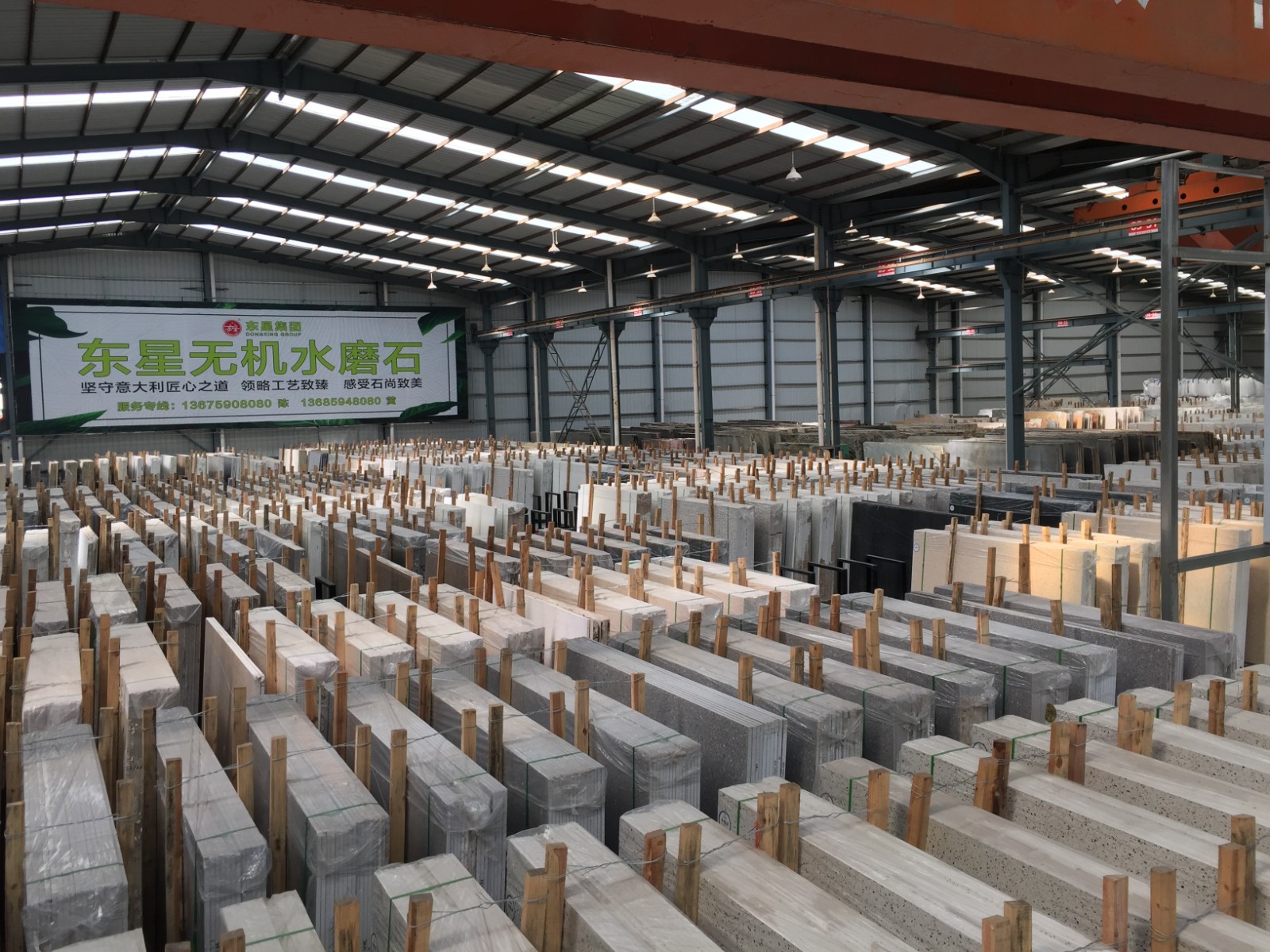
Where Outdoor Terrazzo Performs Best
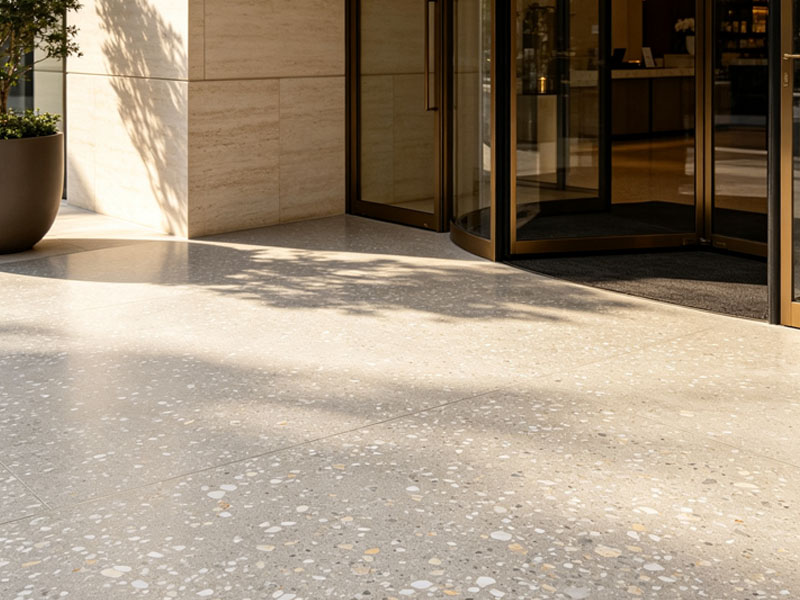
When specified correctly, terrazzo flooring can be used in a wide variety of exterior environments.
Commercial plazas, hotel entrances, public walkways, educational campuses, landscape projects,
and transportation facilities are all common applications. These spaces require materials that not
only look attractive on the day of installation but also maintain their appearance after years of daily use.
Large-format terrazzo slab products are particularly popular in modern architectural projects
because they create a clean, continuous surface with fewer joints. This design approach improves
the overall visual effect while making routine cleaning easier. In premium developments, designers
often extend the same flooring material from indoor areas to adjacent outdoor spaces, creating a
seamless transition between architecture and landscape.
However, outdoor success is rarely determined by aesthetics alone. Proper drainage, substrate preparation,
expansion joints, and professional installation are equally important. Even the highest-quality material
cannot compensate for poor construction practices.
Maintenance Is Simpler Than Many People Expect
Another common misconception is that exterior terrazzo requires extensive maintenance. In reality, routine
care is relatively straightforward when the material has been manufactured and installed correctly.
Regular sweeping removes abrasive particles that may scratch the surface over time, while periodic
washing with clean water or a pH-neutral cleaner helps maintain its appearance. Harsh acidic chemicals
should be avoided because they may affect cement-based surfaces.
Unlike some natural stones that weather unevenly, well-produced terrazzo generally maintains a consistent
appearance throughout its service life. If the surface gradually loses its original finish after many years of
heavy use, professional polishing can restore much of its original appearance without replacing the entire
installation.
For owners seeking long-term value, this ability to renew the surface is one of the major advantages of
terrazzo compared with many other exterior paving materials.
Common Specification Mistakes
From a project perspective, the biggest challenges usually occur before construction begins.
One common mistake is selecting products based only on sample boards. Small samples rarely represent
how a material will appear across hundreds of square meters. Aggregate distribution, joint layout, lighting
conditions, and surrounding materials all influence the final result.
Another mistake is overlooking the manufacturing capability behind the product. Consistent thickness,
precise dimensions, and stable color become increasingly important as project size grows. Choosing a
supplier based only on price may create unnecessary installation issues later.
Successful projects are built on reliable production standards rather than short-term cost savings. This is
why experienced architects often evaluate both the product and the factory before making a final decision.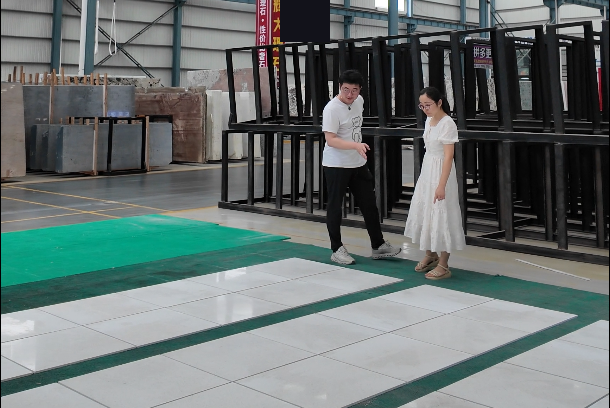
Why Manufacturing Experience Matters
Not every producer follows the same manufacturing standards. A professional manufacturer controls each
stage of production, from raw material selection and batching to pressing, curing, grinding, and quality inspection.
This comprehensive process helps ensure that every slab performs consistently, even when projects require
large production volumes. Stable manufacturing also reduces color variation between batches, improves
dimensional accuracy, and supports efficient installation on site.
As an experienced manufacturer of inorganic terrazzo products, Dongxing Group supplies customized
solutions for commercial, residential, and public projects around the world. By combining advanced production
technology with strict quality control, the company helps architects and contractors achieve consistent results
across projects of different scales.
Beyond supplying materials, experienced manufacturers can also provide technical recommendations on slab
size, thickness, surface finishes, and installation methods, helping project teams make informed decisions
during the design stage.
Conclusion
So, can terrazzo flooring be used outdoors? The answer is yes—but only when the right product is matched
with the right manufacturing process and installation system.
Exterior performance depends on much more than visual appearance. Material composition, production
quality, engineering details, and long-term maintenance all contribute to the success of an outdoor project.
For architects and developers, understanding these factors is far more valuable than simply comparing colors
or finishes.
Modern terrazzo design continues to evolve, offering greater creative freedom while meeting the performance
requirements of today's commercial and public spaces. Combined with reliable production and professional
project support, high-quality terrazzo has become a practical solution for outdoor architecture that values
both durability and design.
Whether the project involves a public plaza, hotel entrance, landscape pathway, or mixed-use development,
selecting a trusted manufacturing partner is just as important as selecting the material itself. A well-produced
terrazzo slab, supported by an experienced company such as Dongxing Group, provides architects with
greater confidence throughout design, construction, and long-term use.