Precast vs Cast-in-Place terrazzo flooring: Which Is Better?
Precast vs Cast-in-Place Terrazzo Flooring: A Complete
Guide for Commercial Projects
When selecting materials for a large architectural project, choosing the right flooring system is not only a
design decision—it is also a long-term performance decision. A material may look impressive in a small
sample, but its real value is determined by how consistently it performs across thousands of square meters.
This is why many architects, contractors, and developers carefully compare different terrazzo solutions
before starting construction. Among the available options, terrazzo flooring is widely recognized for its
durability, design flexibility, and ability to create distinctive architectural spaces.
However, one important question remains: should a project use precast terrazzo or cast-in-place terrazzo?
Although both systems share similar decorative characteristics, their manufacturing methods, installation
processes, and project suitability are quite different. Understanding these differences helps professionals
select the right solution for commercial buildings, hotels, public spaces, and high-end residential developments.
What Is Precast Terrazzo?
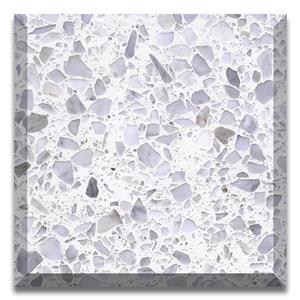
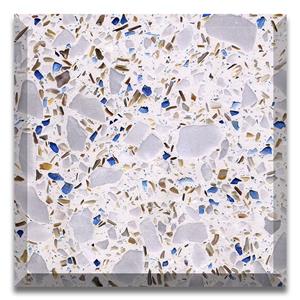
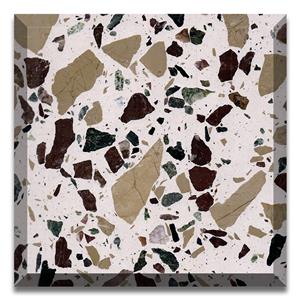
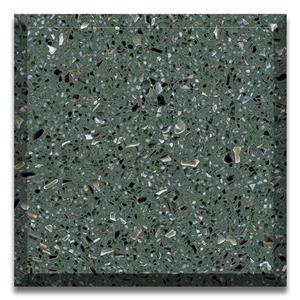
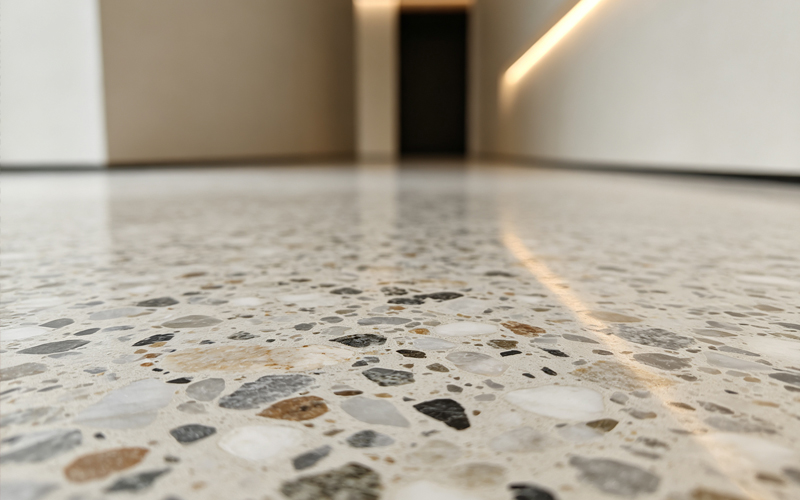
Precast terrazzo is manufactured in a controlled factory environment before being delivered to the construction site.
During production, aggregates such as marble chips, granite, quartz, or other decorative materials are carefully
selected and combined with a suitable binder. The mixture then undergoes forming, compression, curing, and
polishing processes to achieve the final surface finish.
One of the biggest advantages of precast terrazzo is consistency.
For large-scale projects, maintaining the same color, thickness, texture, and surface quality across hundreds
or thousands of pieces is extremely important. Factory-controlled production allows manufacturers to manage
these factors more effectively compared with on-site installation.
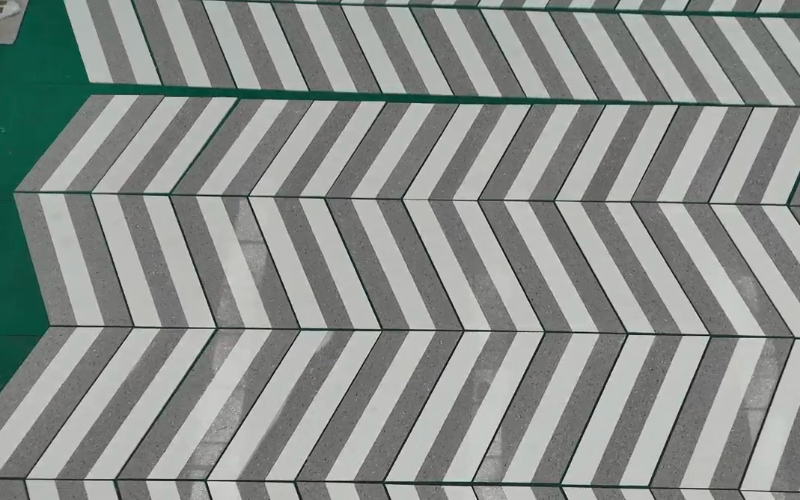
A high-quality terrazzo slab can also be customized according to project requirements, including size, thickness,
aggregate selection, and surface finishing. This makes precast terrazzo suitable for architects who require
both creative freedom and reliable performance.
What Is Cast-in-Place Terrazzo?
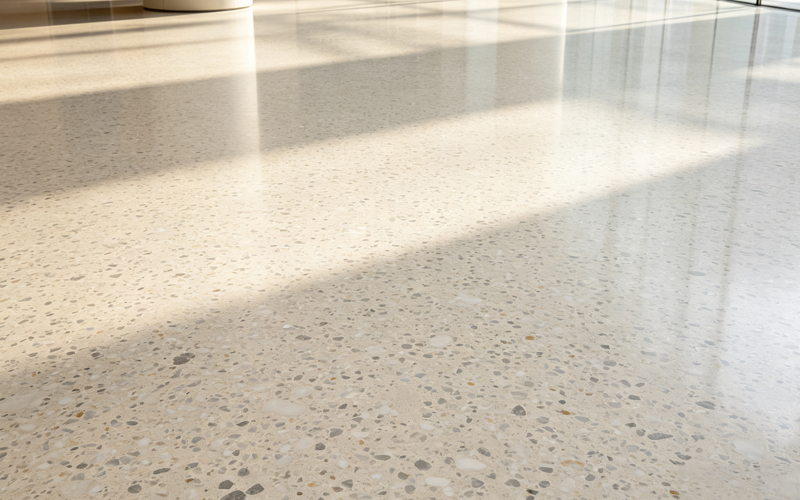
Cast-in-place terrazzo is installed directly at the project location. The terrazzo mixture is poured onto a
prepared surface, cured, and polished after installation.
This traditional method has been used for many decades and remains popular for certain projects, especially
when designers want a continuous floor surface without visible panel joints.
The main advantage of cast-in-place terrazzo is flexibility during installation. Contractors can create large
seamless areas and develop unique patterns directly on-site.
However, this method also depends heavily on installation conditions. Factors such as temperature, humidity,
workmanship, curing time, and site management can influence the final result.
For smaller customized projects, cast-in-place terrazzo can be an effective solution. But for international
projects requiring strict quality control and predictable results, many professionals now consider factory-
produced systems.
Precast vs Cast-in-Place Terrazzo: Key Differences
1. Production Control
The biggest difference between the two systems is where production takes place.
Precast terrazzo is manufactured in a factory where every production step can be monitored. Raw materials,
mixing ratios, compression strength, and surface finishing can be controlled before delivery.
Cast-in-place terrazzo depends more on the conditions of the construction site. Even experienced installers
may face challenges caused by environmental changes.
For projects where consistency is critical, factory production provides a significant advantage.
2. Installation Efficiency
Construction schedules are becoming increasingly important, especially for commercial developments.
Because precast products arrive at the site ready for installation, they can significantly reduce construction
time. Contractors can install finished pieces without waiting for long curing periods.
Cast-in-place terrazzo usually requires more time because the material must be prepared, installed, cured,
and polished on-site.
For hotels, shopping centers, airports, and large public buildings, faster installation can help reduce project delays.
3. Design Flexibility
Both systems provide excellent opportunities for creative expression.
Modern terrazzo design is no longer limited to traditional patterns. Architects can choose different aggregates,
colors, textures, and finishes to create unique visual effects.
Cast-in-place terrazzo allows designers to create artistic patterns directly on the floor.
Precast terrazzo provides more predictable results because each piece is produced under the same conditions.
This is especially valuable when a project requires repeated patterns or large quantities of matching surfaces.
Why Precast Terrazzo Is Often Preferred for Large Projects
For large commercial developments, the biggest challenge is not producing one beautiful terrazzo sample.
The challenge is producing thousands of pieces with consistent quality.
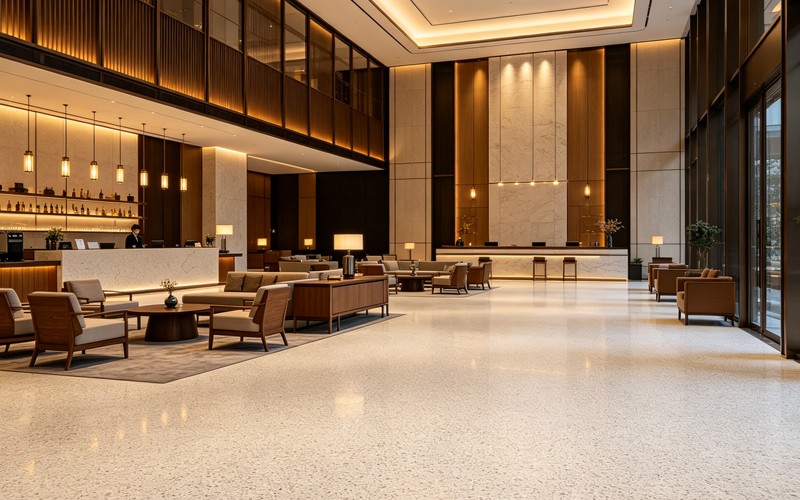
A hotel lobby, airport terminal, or commercial complex requires materials that can maintain the same appearance
throughout the entire space.
This is where precast terrazzo provides advantages.
Factory production helps control:
Material consistency
Color accuracy
Thickness tolerance
Surface quality
Delivery schedule
In addition, precast systems allow suppliers to prepare materials according to detailed project specifications before
installation begins.
This reduces uncertainty during construction and helps project teams maintain better control over the final result.
Choosing the Right Terrazzo Solution for Your Project
The best terrazzo system depends on several factors:
Project Scale
Large commercial projects often benefit from precast solutions because they require stable production
capacity and consistent quality.
Design Requirements
Projects with complex artistic patterns may consider cast-in-place options, while projects requiring
repeated elements often benefit from precast products.
Installation Conditions
A controlled factory environment usually provides more predictable results compared with manufacturing
directly on-site.
Long-Term Performance
The quality of raw materials, manufacturing technology, and installation method all influence the lifespan
of the finished surface.
Understanding the intended terrazzo application before selecting a system can help avoid unnecessary
costs and construction problems.
Why Choose Dongxing Group as Your Terrazzo Partner?
For architectural projects, choosing the right supplier is just as important as choosing the right material.
A reliable manufacturer needs more than production capacity. It requires experience in material selection,
quality control, customization, and project support.
As an experienced terrazzo manufacturer, Dongxing Group provides customized terrazzo solutions for
commercial, residential, and public projects worldwide.
By controlling the production process from raw material selection to final polishing, Dongxing Group helps
architects and contractors achieve consistent results across different project scales.
For customers looking for customized solutions, the company can provide support in areas such as terrazzo
colors, aggregate selection, slab sizes, thickness options, and surface finishes.
Conclusion
Both precast and cast-in-place terrazzo have their own advantages. Cast-in-place terrazzo remains a valuable
choice for projects that require seamless surfaces and unique artistic applications.
However, for many modern commercial developments, precast terrazzo offers stronger advantages in quality
consistency, production control, installation efficiency, and long-term reliability.
When selecting a flooring system, the key question is not simply which material looks better. The more important
question is which solution can deliver stable performance throughout the entire lifecycle of the project.
For architects, contractors, and developers seeking reliable terrazzo flooring solutions, working with an experienced
manufacturer can make a significant difference in achieving both design goals and project success.
Frequently Asked Questions About Precast and
Cast-in-Place Terrazzo Flooring
Is precast terrazzo better than cast-in-place terrazzo?
There is no single answer because the best option depends on the project requirements. Cast-in-place terrazzo provides
greater flexibility for creating seamless surfaces directly on-site, while precast terrazzo offers better production control,
consistent quality, and faster installation.
For large commercial projects that require thousands of square meters of consistent flooring, precast terrazzo is often
the preferred choice because manufacturers can control material quality and production accuracy before delivery.
Is precast terrazzo suitable for large commercial projects?
Yes. Precast terrazzo is widely used in commercial applications such as hotels, shopping centers, airports, offices,
and public buildings.
The main advantage is consistency. Large projects require many pieces of material with the same color, thickness,
and surface finish. Factory-controlled production helps reduce variations and improves installation efficiency.
What is the typical thickness of a terrazzo slab?
The thickness of a terrazzo slab depends on the application, installation method, and project requirements.
For architectural projects, common thickness options include thin slabs for interior applications and thicker
solutions for areas requiring higher load performance. A professional terrazzo supplier can recommend the
appropriate thickness based on location, usage, and structural requirements.
Can terrazzo be customized for different design projects?
Yes. One of the biggest advantages of modern terrazzo is its design flexibility.
Through different combinations of aggregates, colors, sizes, and finishing methods, architects can create unique
surfaces that match different architectural concepts. This flexibility makes terrazzo design suitable for both
contemporary and traditional projects.
How do I choose a reliable terrazzo manufacturer?
When selecting a terrazzo supplier, buyers should consider more than price. Important factors include production
experience, quality control systems, customization capability, project experience, and delivery reliability.
For international projects, working with an experienced manufacturer such as Dongxing Group can help ensure
consistent quality and professional support throughout the project.