Terrazzo Flooring for Shopping Malls: Design & Performance
Terrazzo Flooring for Shopping Malls: Design and Performance
Shopping malls are among the busiest commercial environments. Every day, their floors face thousands of footsteps,
shopping carts, food spills, frequent cleaning, and constant movement between retail stores and public areas.
Choosing the right flooring material is therefore about more than appearance. It must combine durability, easy
maintenance, consistent quality, and attractive design.
Terrazzo flooring has become a practical option for modern shopping malls because it offers a wide range of colors,
aggregate combinations, and surface finishes. For large commercial projects, inorganic precast terrazzo slabs also
provide a factory-controlled alternative to traditional on-site installation.
1. Why Is Terrazzo Flooring Suitable for Shopping Malls?
A shopping mall needs flooring that can maintain its appearance under continuous daily use. Terrazzo stone
combines mineral aggregates with a cement-based or resin-based binder, creating a decorative surface with a solid structure.
For commercial projects, several characteristics make terrazzo worth considering.
Durability for high-traffic areas
Main corridors, entrances, and elevator lobbies experience heavy foot traffic throughout the day. Properly
manufactured and installed terrazzo flooring can withstand regular use while maintaining its appearance.
The actual performance depends on the binder system, aggregate selection, slab thickness, installation, and maintenance.
Easy daily maintenance
Shopping mall floors require frequent cleaning. A properly finished and sealed terrazzo surface is relatively
easy to maintain. Regular dust removal, suitable neutral cleaners, and periodic professional maintenance
help preserve its appearance.
Consistent appearance across large areas
For malls covering thousands of square meters, visual consistency is important. Factory-produced terrazzo
slabs allow manufacturers to control aggregate distribution, base color, and surface finishing before delivery.
This helps reduce variations between production batches when materials are properly matched.
2. Terrazzo Design for Different Mall Areas
A successful terrazzo design should reflect the function and atmosphere of each area rather than using one
pattern throughout the entire building.
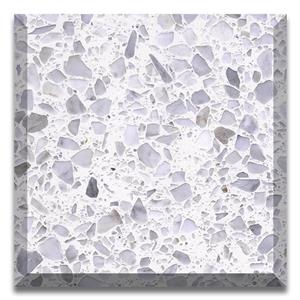
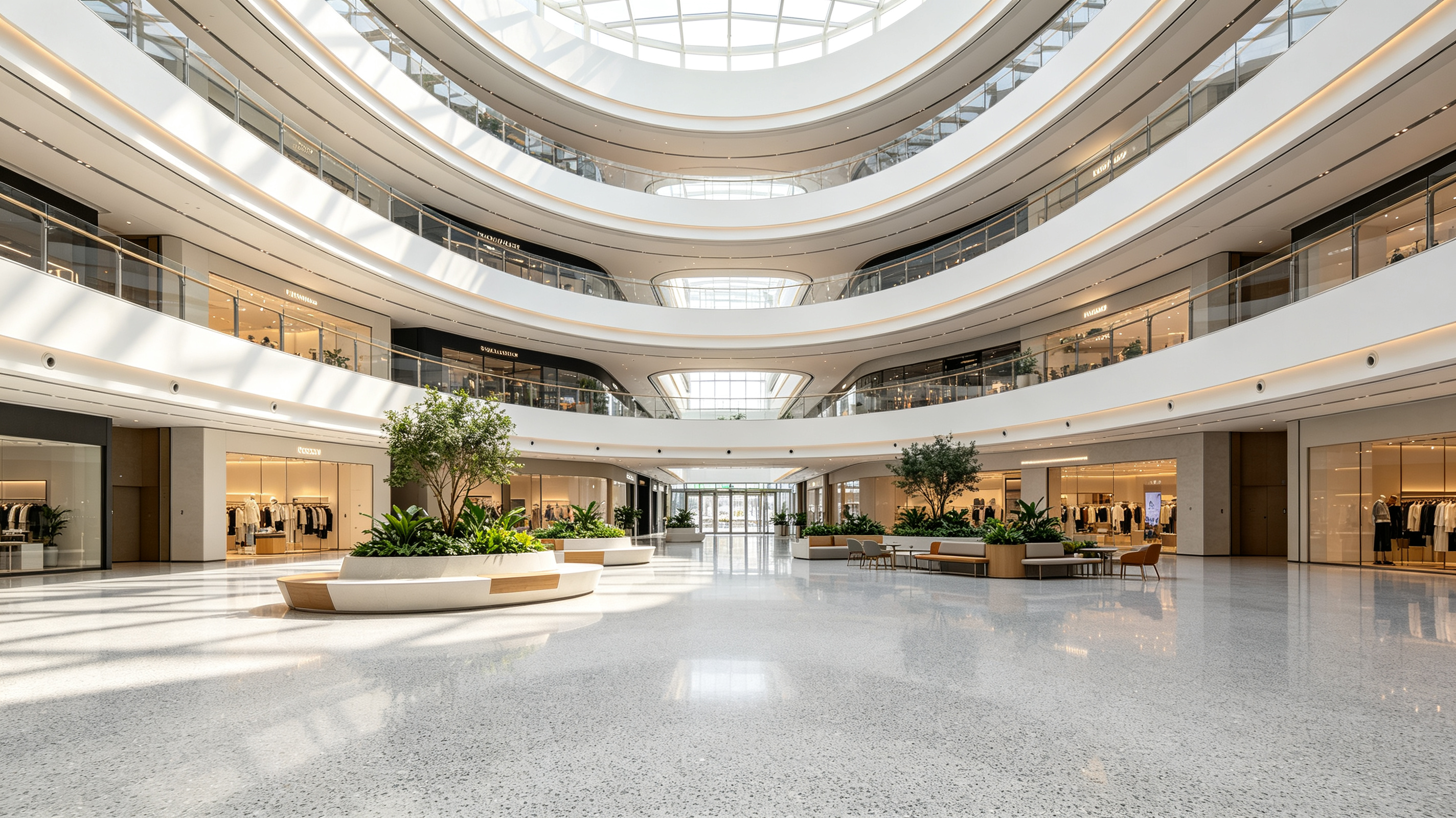
Main corridors and atriums: Light grey, beige, and neutral terrazzo designs create a spacious appearance.
Larger aggregates can add visual character to expansive public spaces.
Retail entrances: Custom colors and decorative patterns help establish a recognizable visual identity.
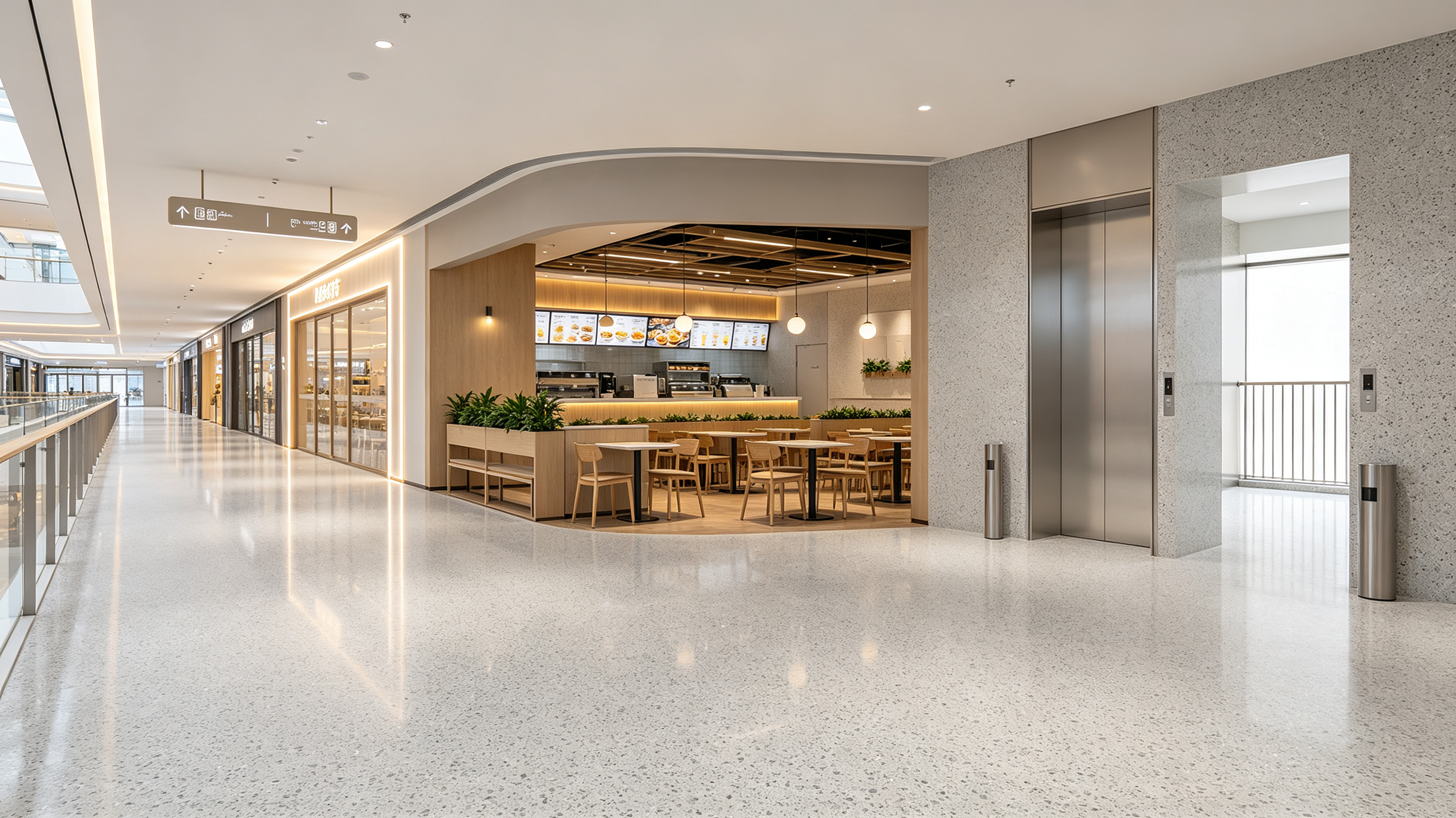
Food courts: Practical colors and easy-to-clean finishes are important because food and beverage spills
occur frequently.
Elevator lobbies and staircases: Matching terrazzo flooring with stair treads, risers, and wall finishes
creates a more coordinated interior.
The choice of terrazzo slab size, aggregate color, and surface finish should also consider lighting, circulation
patterns, and the overall interior concept.
3. Choosing the Right Terrazzo Slab for Large Projects
For large shopping mall developments, material specifications should be confirmed before production begins.
Inorganic precast terrazzo slabs are manufactured in factories through processes such as material mixing, vibration
molding, curing, grinding, and polishing. Compared with traditional cast-in-place systems, precast products offer
factory-controlled production and can be inspected before delivery.
When selecting a terrazzo slab, project teams should consider:
Thickness and dimensions: Choose according to floor loading, substrate conditions, and installation requirements.
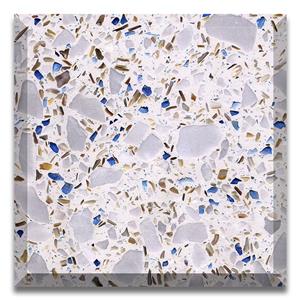
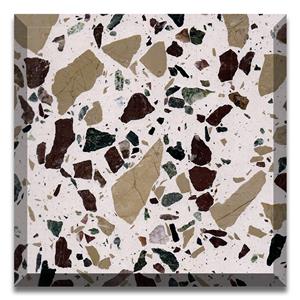
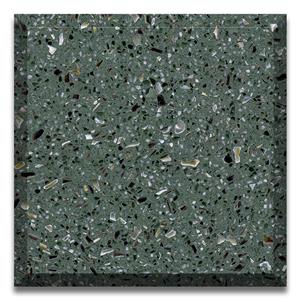
Aggregate distribution: Confirm the stone chip size, color, and overall pattern through physical samples.
Surface finish: Polished and honed finishes offer different visual effects and maintenance considerations.
Slip resistance: Select an appropriate finish and verify its tested slip performance, especially around entrances
and areas exposed to water.
Installation details: Joint layout, substrate preparation, adhesive selection, and expansion joints all affect the
finished floor.
A sample approval and mock-up installation are recommended before mass production.

4. A Shopping Mall Project: Putian MixC
Real projects provide useful insight into how terrazzo application works in commercial environments.
At Putian MixC, Dongxing's inorganic terrazzo was used for both flooring and columns. The project incorporated
Putian Beige, Light Grey, and Dark Grey, creating a coordinated material palette across different interior surfaces.
This project demonstrates how terrazzo stone can be used beyond conventional floor finishes. By coordinating
colors and aggregates across floors and columns, designers can create a more unified commercial interior.
For large-scale developments, early coordination between designers, contractors, and manufacturers is essential
to confirm colors, dimensions, quantities, and delivery schedules.
5. Frequently Asked Questions
Q1: Is terrazzo flooring suitable for shopping malls?
Yes. Properly specified terrazzo can be used in high-traffic commercial areas. Its suitability depends on product quality,
installation methods, finish selection, and maintenance.
Q2: Is inorganic terrazzo better than traditional terrazzo for malls?
Inorganic precast terrazzo offers factory-controlled production and consistent slab specifications. Traditional cast-in-place
terrazzo provides a continuous surface with fewer visible joints. The right choice depends on project design and
construction conditions.
Q3: How do you maintain terrazzo flooring in shopping malls?
Daily dust removal and regular cleaning with suitable neutral products are recommended. Avoid harsh chemicals and
follow the manufacturer's maintenance instructions.
Q4: Can terrazzo colors and patterns be customized?
Yes. Manufacturers can adjust the base color, aggregate size, aggregate combination, and surface finish to meet specific
architectural requirements.
Conclusion
Choosing flooring for a shopping mall requires balancing design, durability, maintenance, and construction efficiency.
With flexible design options and factory-controlled production, inorganic precast terrazzo is a suitable solution to
consider for many commercial developments.
At Dongxing Terrazzo, we manufacture customized inorganic terrazzo slabs for commercial and architectural projects.
From color development and sample approval to large-volume production, we support project teams in finding
suitable terrazzo solutions for their spaces.