What Is Terrazzo? Types, Materials and Uses
What Is Terrazzo? Types, Materials and Uses
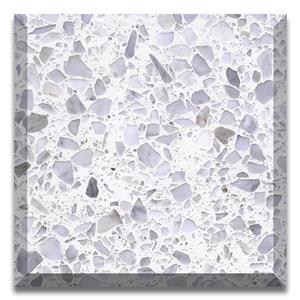
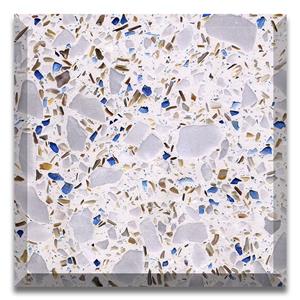
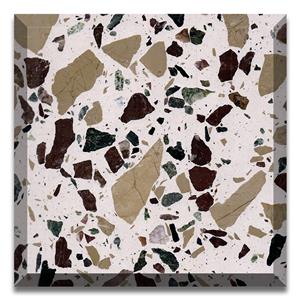
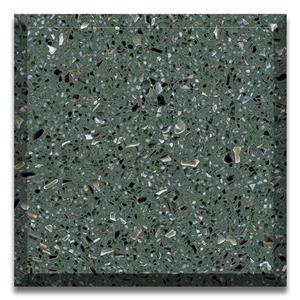
Terrazzo is a composite material made from decorative aggregates, such as marble, granite, quartz, or glass,
combined with a cement-based or resin-based binder. After curing and surface grinding, the aggregates
become visible, creating patterns that suit different architectural styles.
Today, terrazzo is used in shopping malls, hotels, offices, hospitals, and residential interiors. Its colors,
aggregate sizes, and finishes can be customized for different projects.
So, what is terrazzo made of, how is it produced, and how can you choose the right product? At Dongxing Group,
we manufacture inorganic terrazzo slabs and tiles for commercial and architectural applications. This guide
covers the main types, production methods, benefits, and uses of terrazzo.
1. What Is Terrazzo Made Of?
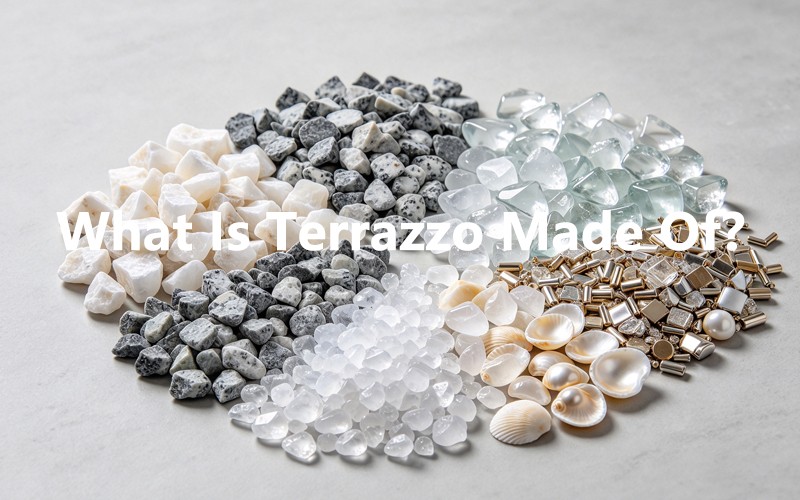
Terrazzo consists of two main components: decorative aggregates and a binder.
Aggregates create the visible pattern. Common materials include marble, granite, quartz, glass, and other
mineral chips. Small particles create a fine, uniform appearance, while larger chips produce stronger visual
contrast.
Binders hold the aggregates together. Cement-based terrazzo uses a cementitious binder, while epoxy
terrazzo uses a resin-based system. These systems differ in manufacturing, installation, and performance.
Dongxing's inorganic terrazzo uses a cement-based binder and selected stone aggregates. By adjusting
the base color and aggregate combination, we can produce different patterns for precast slabs and tiles.
2. What Are the Different Types of Terrazzo?
Terrazzo can be classified by binder type and production method.
Cement-Based and Epoxy Terrazzo
Cement-based terrazzo combines mineral aggregates with a cementitious binder. It is available in different
colors and can be produced as precast products or installed on site.
Epoxy terrazzo uses resin to bind the aggregates. It allows a wide range of colors and is often used in thin,
seamless flooring systems. Outdoor suitability depends on the specific formulation and exposure conditions.
Precast Terrazzo vs. Poured-in-Place Terrazzo
Precast terrazzo is manufactured into slabs, tiles, or other components before delivery. Poured-in-place
terrazzo is installed and finished directly at the construction site.
Precast products allow manufacturers to control production conditions and prepare defined dimensions
before shipment. They can be a practical choice for commercial projects that require consistent patterns
and coordinated material supply.
What Is Inorganic Terrazzo?
Inorganic terrazzo uses an inorganic binder rather than a resin-based binder. Dongxing manufactures
cement-based inorganic terrazzo through raw material selection, mixing, molding, curing, grinding,
polishing, and quality inspection.
The final product's properties depend on its formulation, manufacturing process, and surface treatment.
Buyers should review the relevant technical data when selecting materials for specific applications.
3. How Is Terrazzo Made?
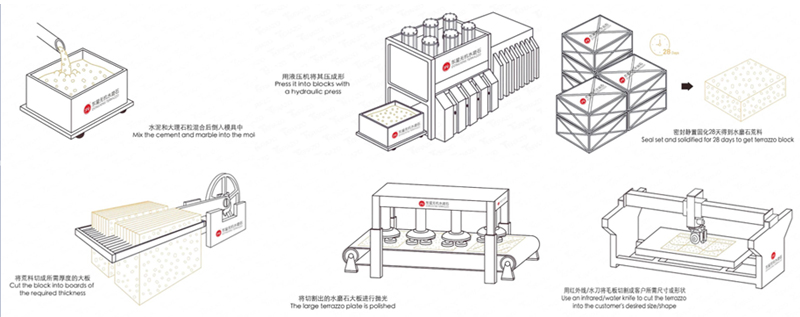
The manufacturing process influences the appearance and quality of terrazzo.
Raw material selection: Aggregates, binders, and pigments are selected according to the required
color and design.
Mixing: The ingredients are proportioned and mixed to distribute the aggregates evenly.
Molding and compaction: For Dongxing's precast products, high-frequency vibration and vacuum
high-pressure molding help compact the mixture.
Curing: Controlled curing allows the material to develop the required strength and stability.
Grinding and polishing: The surface is ground to expose the aggregates and finished according to
the selected specification.
Quality inspection: Finished slabs are checked for dimensions, surface appearance, and applicable
echnical requirements.
This factory-based process helps prepare terrazzo slabs and tiles for different architectural projects before
delivery.
4. What Are the Benefits and Limitations of Terrazzo?
Design Flexibility
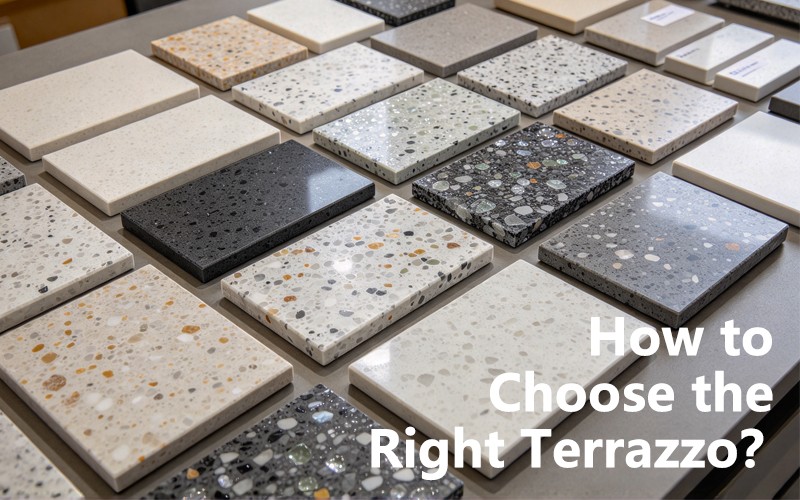
Terrazzo design can range from subtle, fine-speckled surfaces to bold patterns with larger stone chips.
Base colors, aggregate sizes, and finishes can be adjusted to suit different interiors.
Durability and Maintenance
Properly manufactured and installed terrazzo can perform well in commercial environments. Regular
cleaning with suitable products helps maintain its appearance. Actual durability depends on the material
system, installation quality, traffic, and maintenance.
Surface Finish and Slip Resistance
Polished terrazzo provides a smooth, reflective appearance, while honed and textured finishes create different
visual effects. Slip resistance depends on the surface, contaminants, and conditions of use. Wet areas and stairs
require particular attention to relevant test results.
Installation and Cost
Project costs depend on material type, thickness, design complexity, quantity, transportation, and installation.
Precast products also require suitable handling, substrate preparation, and joint planning.
5. Where Can Terrazzo Be Used?
Terrazzo Flooring in Commercial Buildings
Terrazzo flooring is commonly considered for shopping malls, hotel lobbies, offices, restaurants, and other public
interiors. Its decorative patterns can support both understated and distinctive architectural designs.
Walls, Stairs, and Countertops
Suitable terrazzo products can also be used for wall cladding, stair components, countertops, and decorative
features. Dimensions, fixing methods, edge details, and surface requirements should be confirmed during design.
Indoor and Outdoor Projects
Not every terrazzo product is suitable for outdoor use. Weather exposure, moisture, temperature changes, UV stability,
drainage, and slip resistance should be considered before specifying a product.
Dongxing supplies inorganic terrazzo slabs and tiles for architectural and commercial projects. Product selection
should always reflect the intended application and project requirements.
6. Terrazzo vs. Marble, Tile, and Concrete
Terrazzo vs. marble: Marble is natural stone quarried in blocks and cut into slabs. Terrazzo is a composite material
made from aggregates and a binder. Marble offers natural veining, while terrazzo provides greater control over
aggregate patterns and color combinations.
Terrazzo vs. porcelain tile: Porcelain tile offers a wide range of manufactured designs and formats. Terrazzo has a
distinctive aggregate-based appearance. Installation requirements, joint layout, maintenance, and cost should be
compared for each project.
Terrazzo vs. polished concrete: Polished concrete reveals the character of a concrete surface, while terrazzo is designed
around decorative aggregates. Both can suit contemporary interiors, but their appearance and construction methods differ.
7. How to Choose the Right Terrazzo
Before ordering terrazzo slabs, consider these factors:
Color and aggregates: Match the base color and chip size to the design scheme.
Dimensions and thickness: Confirm the required sizes, structural conditions, and installation method.
Surface finish: Select a finish that meets both appearance and functional requirements.
Technical performance: Review relevant strength, water absorption, slip-resistance, and fire-performance
data where required.Samples and quantity: Check physical samples, order volume, lead time, and production availability
with the supplier.
For large projects, evaluating material, transportation, installation, and maintenance together provides a
more useful basis for comparison.
8. Frequently Asked Questions About Terrazzo
Is terrazzo a natural stone?
No. Terrazzo is a composite material that may contain natural stone chips, but the finished product is
manufactured rather than quarried as a single stone.
Is terrazzo suitable for commercial flooring?
Yes. Many terrazzo systems are used in shopping malls, hotels, offices, and public buildings. The product
must meet the project's performance and installation requirements.
Is terrazzo easy to maintain?
Terrazzo can be relatively easy to maintain when properly installed. Cleaning methods and sealing requirements
depend on the material and surface finish.
Is terrazzo slippery when wet?
It can be, depending on the finish and conditions. Check appropriate slip-resistance test results before specifying
terrazzo for wet areas or stairs.
How long does terrazzo last?
A properly manufactured, installed, and maintained terrazzo surface can have a long service life. Its lifespan depends
on traffic, material quality, installation, and maintenance.
Is inorganic terrazzo suitable for outdoor use?
Some products may be suitable, but outdoor performance must be confirmed for the specific formulation and finish.
Weather resistance and slip resistance should be evaluated.
Conclusion
Terrazzo combines decorative aggregates with a binder to create a versatile architectural material. Its appearance can be
customized through aggregate selection, base color, slab dimensions, and surface finish.
For architects, designers, and contractors, understanding the material composition, manufacturing process, and installation
requirements helps ensure the right choice for each project.
Dongxing Group manufactures inorganic terrazzo slabs and tiles in different colors, patterns, sizes, and finishes. Contact our
team to discuss your project requirements and explore suitable options for your next commercial or architectural project.