Is Terrazzo Flooring Slippery? A Slip Resistance Guide

Is Terrazzo Flooring Slippery? A Slip Resistance Guide
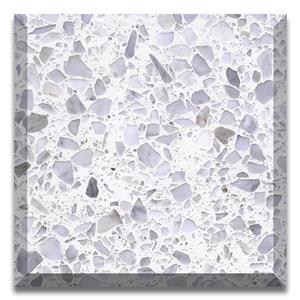
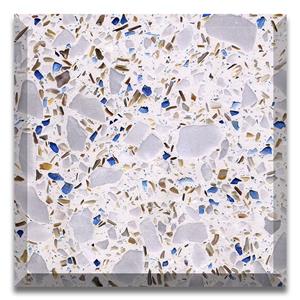
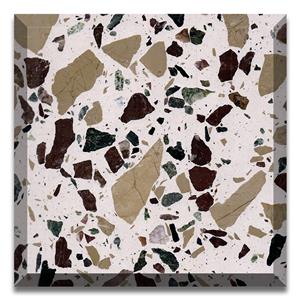
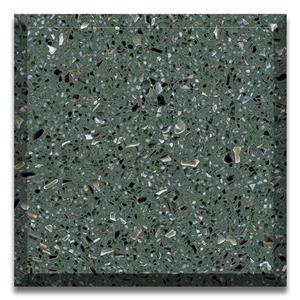
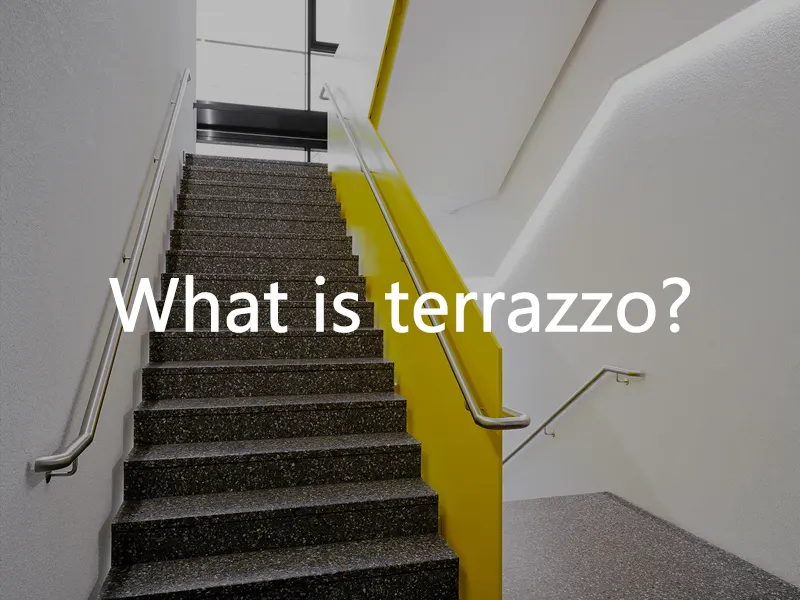
What is terrazzo? Terrazzo is a composite material made from a binder and stone aggregates such as marble, granite, quartz, and other decorative stones. Manufacturers cast, cure, grind, and finish the material to expose the aggregates and create the final surface.
For architects and designers, terrazzo offers almost unlimited options in color, aggregate size, and surface finish. However, busy public areas, entrances, stairs, and wet areas require more than good appearance. Project teams should also consider slip resistance.
One question comes up often: Is terrazzo flooring slippery?
The answer mainly depends on the surface finish and the conditions of the installation area. The same terrazzo stone can feel and perform differently with different finishes. Understanding these differences helps project teams select a terrazzo flooring system that suits the space.
What Affects Terrazzo Slip Resistance?
Terrazzo slip resistance does not come from one factor alone. The surface finish, moisture, contaminants, cleaning methods, and traffic conditions can all affect how much traction a floor provides.
A smooth, highly polished surface generally offers less texture underfoot than a honed or textured surface. When water, oil, dust, or cleaning residue covers the floor, traction can decrease further.
For example, the Singapore Building and Construction Authority looks at slip performance under both dry and wet conditions. It also notes that surface conditions can affect how much grip a floor provides.
This is why we do not recommend choosing terrazzo flooring based only on its color or aggregate. The final surface matters just as much.
Does a Polished Terrazzo Floor Become Slippery?
Polished terrazzo has a smooth and reflective surface. Polishing brings out the color and detail of the terrazzo stone. It also makes the aggregate pattern clearer and more noticeable.
For this reason, designers often use polished terrazzo in hotel lobbies, showrooms, reception areas, and retail spaces. These are places where the floor is an important part of the interior design.
However, a polished surface needs more attention in areas where water is likely to appear. A wet polished floor can provide less traction than the same material under dry conditions.
This does not mean polished terrazzo is unsuitable for commercial interiors. It means the finish should match the actual use of the space.
For a dry lobby, a polished surface may meet both design and performance needs. For entrances that often get wet from rain, the project may need a more suitable surface finish or other measures to reduce slip risk.
Does Honed Terrazzo Provide Better Slip Resistance?
Honed terrazzo has a lower sheen and a less reflective surface than polished terrazzo. The finish still exposes the natural stone aggregates, but it creates a different surface character.
Designers often choose honed finishes when they want a quieter appearance or a more natural stone-like effect. The lower sheen can also make the surface less visually sensitive to footprints, reflections, and minor surface marks.
Honed terrazzo can be a practical option for high-traffic interiors. It may also suit areas where moisture can occasionally occur.
However, “honed” does not automatically mean “anti-slip.” Slip performance still depends on the actual product, finish, and test method. If a project has specific slip-resistance requirements, buyers should check the test data for the finished material. The name of the finish alone is not enough.
What About Textured Terrazzo Finishes?
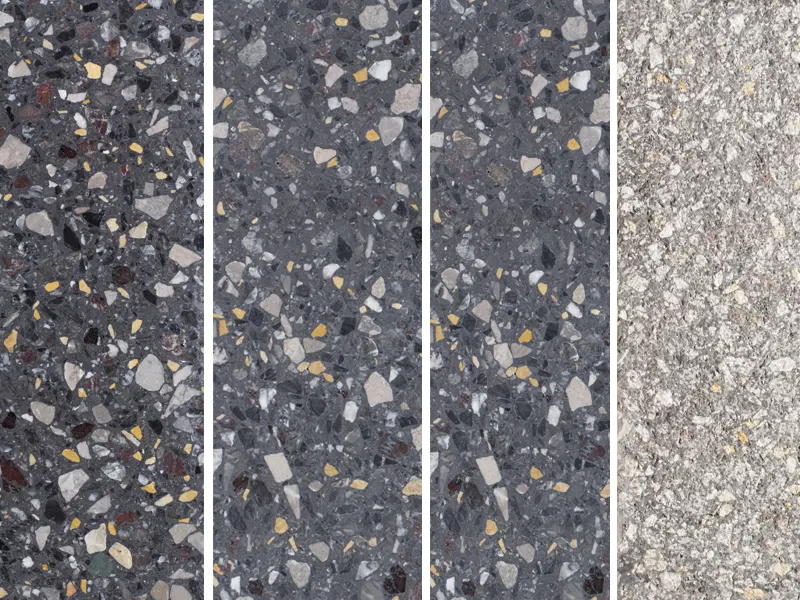
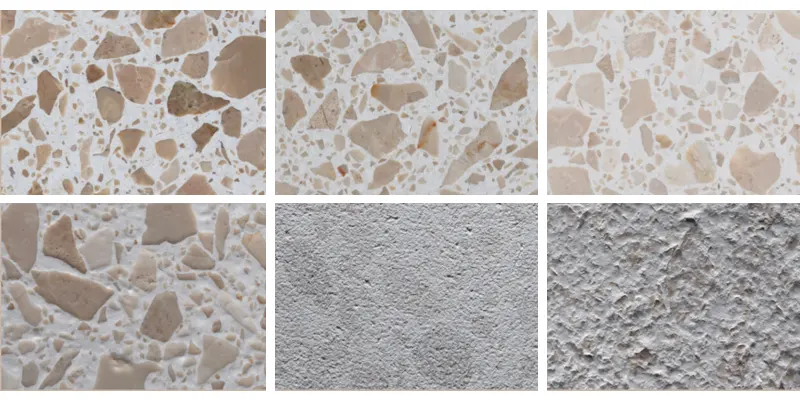
Some projects require more surface texture. Depending on the product and production process, terrazzo can have brushed, bush-hammered, or other textured finishes.
These finishes change the surface profile and can provide more traction than a highly polished finish. Designers can use these finishes for entrances, outdoor walkways, steps, ramps, and other areas where wet conditions are expected.
The trade-off is appearance.
A textured finish may not show the terrazzo design in the same way as a polished surface. The stone aggregates may appear softer or less reflective, and the overall floor can have a more tactile character.
For this reason, designers should consider both performance and appearance when selecting a finish.
Does the Terrazzo Stone Affect Slip Resistance?
The type of stone aggregate can affect the final surface. However, designers should evaluate the aggregate together with the surface finishing process.
Aggregate size, hardness, shape, and distribution all contribute to the surface structure. Grinding and finishing expose the stone aggregates and determine how smooth the final surface feels.
For example, two terrazzo slabs can use the same marble aggregate but have different surface finishes. One may receive a high polish, while the other may receive a honed finish. Although the terrazzo stone remains the same, the two surfaces can have different characteristics underfoot.
This is particularly important when a designer develops a custom terrazzo design. A project should evaluate the complete finished surface rather than the aggregate alone.
Dry Areas and Wet Areas Need Different Considerations
A terrazzo floor that works well in a dry interior may not provide the same level of traction when it becomes wet.
Think about the difference between a hotel corridor and a swimming pool entrance. The corridor may remain dry for most of the day. The pool entrance regularly receives water from people's feet. These two spaces should not automatically use the same finish.
The same applies to restaurant entrances, shopping mall entrances, bathrooms, outdoor walkways, ramps, and stairs.
Drainage also matters. If water stays on the floor instead of draining away, the surface can become more slippery. This can happen regardless of the terrazzo design.
For commercial projects, designers should therefore consider the expected moisture level before specifying the final finish.
Can Cleaning Change Slip Performance?
Yes. Floor maintenance can affect traction over time.
Dust, grease, oil, soap residue, and some cleaning products can make a floor more slippery. Regular cleaning helps remove these contaminants, but the cleaning method should also suit the terrazzo surface.
Over-polishing can also change the character of the floor. For a commercial terrazzo flooring project, project teams should plan maintenance before installation.
The goal is not simply to make the floor look bright. The maintenance process should help preserve the intended surface condition throughout its service life.
How Should You Choose a Terrazzo Finish?
Start with the application, not the appearance.
First, identify where the terrazzo flooring will be installed. Is the area usually dry? How much foot traffic will it receive? Could people walk across the floor with wet shoes?
Then consider the desired terrazzo design.
A polished finish may suit a dry hotel lobby where the terrazzo pattern needs to stand out. A honed finish may work better when the project calls for a softer appearance and more practical surface character. A textured finish may be more appropriate for areas with regular exposure to water.
Project teams should also check the required slip-resistance standard for their market. Different countries use different slip-resistance tests and building standards. The specification should therefore refer to the standard required for the project instead of relying on a general “anti-slip” label.
Our Approach to Terrazzo Flooring
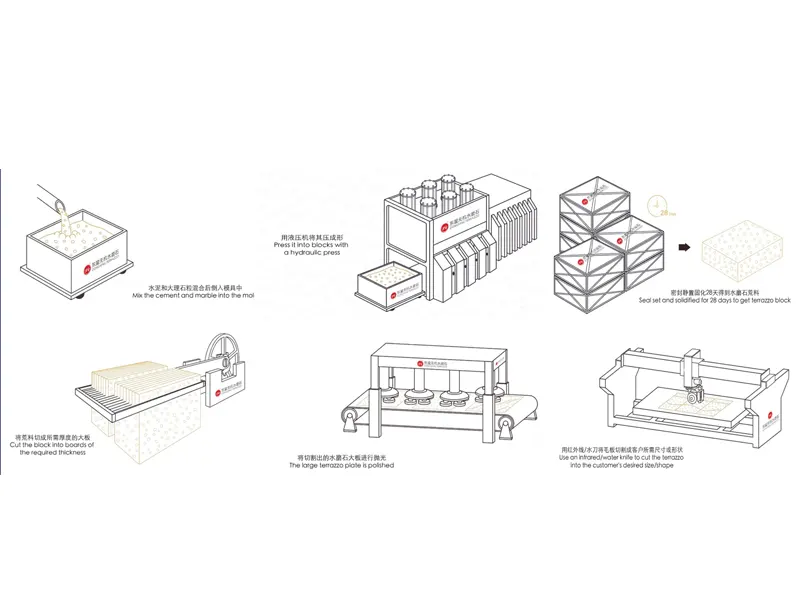
At Dongxing, we produce inorganic terrazzo slabs with natural stone aggregates and a cement-based binder. We use high-frequency vibration and vacuum high-pressure molding during production. These processes help increase material density and create a more compact slab.
After molding and curing, we grind and finish the slabs. This exposes the stone aggregates and creates the required surface finish.
From our experience, the finish should always follow the application. We do not treat polished, honed, and textured surfaces as the same options. Each one creates a different balance between appearance, surface texture, maintenance, and practical use.
For projects with specific slip-resistance requirements, we recommend checking the actual finished product and its test data before placing a large order.
Final Thoughts
So, is terrazzo flooring slippery?
It can be, particularly when a very smooth surface becomes wet or affected by dirt. But terrazzo is not automatically an unsuitable flooring material for projects that require good slip resistance.
The key is to consider the complete surface. This includes the stone aggregates, their distribution, the surface finish, moisture conditions, cleaning method, traffic level, and the relevant test standard.
Good terrazzo design is not only about choosing a beautiful aggregate or color. The right finish should also suit the way people will use the space.