Terrazzo Design Trends 2026: What's New?

Terrazzo Design Trends 2026: What's New?
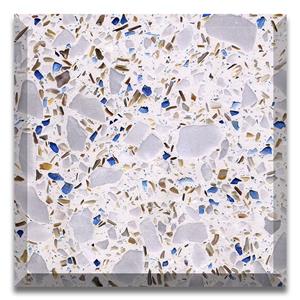
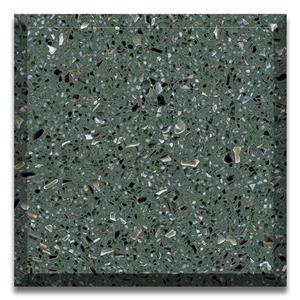
Terrazzo is entering 2026 with a different look. Fine-speckled terrazzo is still widely used. However, designers are now exploring larger stone chips, warmer colors, softer color combinations, and larger formats.
For architects and interior designers, this change is not simply about following a new color trend. Aggregate size, base color, surface finish, and slab format can all change how terrazzo looks in a space. format can completely change how a material reads in a space.
At Dongxing Group, we produce inorganic terrazzo slabs and tiles using natural stone aggregates. From our experience, these design changes are also influencing how customers develop new terrazzo materials for commercial interiors.
1. Larger Stone Chips Create a Stronger Visual Impact
One of the clearest directions for 2026 is the use of larger aggregates.
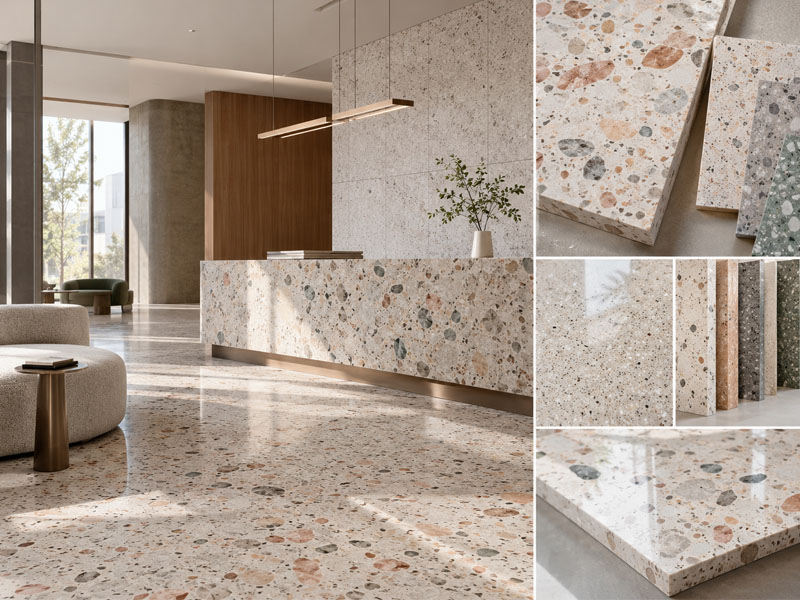
Traditional terrazzo often uses relatively small marble or stone fragments to create a fine, even pattern. Newer designs are moving toward larger chips that make each piece of stone more visible.
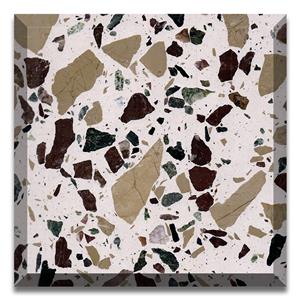
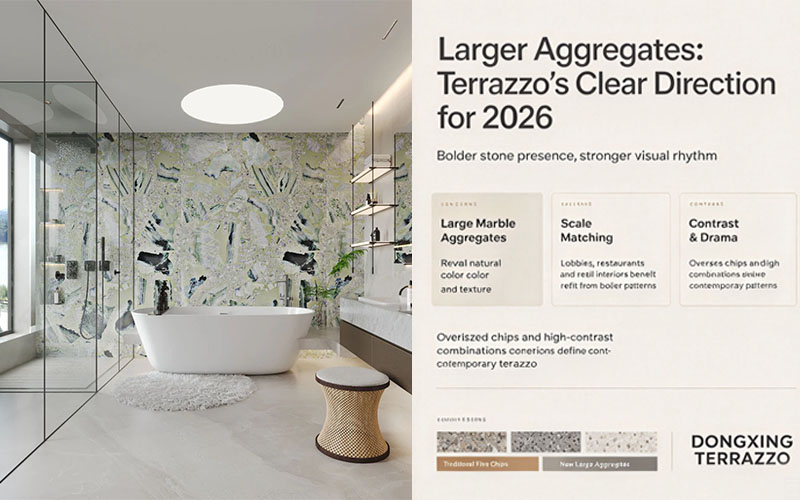
Large marble aggregates can give a terrazzo floor a stronger visual rhythm. They can also bring out the natural colors and textures of the stone itself.
This approach works well in spacious hotel lobbies, restaurants, retail interiors, and other areas where people view the floor from a distance.
However, larger chips do not automatically make a better design. The aggregate size should match the scale of the space. A busy pattern can make a narrow corridor feel crowded. In contrast, a large lobby can provide enough space for a bolder design.
Recent 2026 design coverage has also highlighted oversized aggregates and higher-contrast combinations as an important direction for contemporary terrazzo.
2. Warm Neutrals Are Replacing Cold Grey
Another important shift is color.
Grey and white have long been common choices for terrazzo. They remain useful, especially in commercial and minimalist interiors, but warmer tones are receiving more attention in 2026.
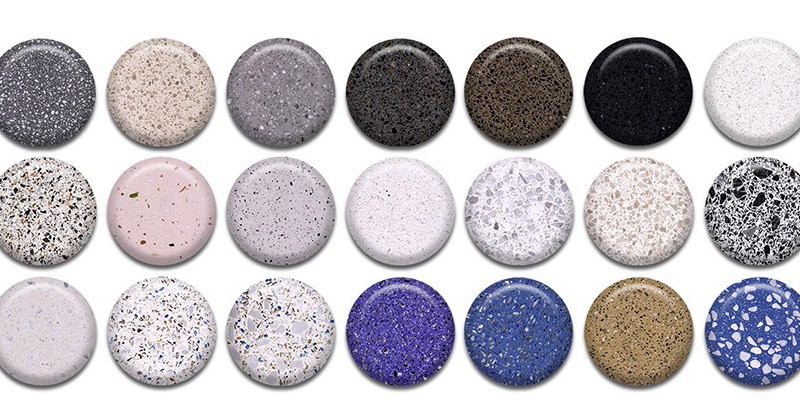
Designers are working with colors such as warm white, cream, sand, beige, taupe, terracotta, and soft brown. These colors give terrazzo a warmer look. They also work well with wood, natural stone, metal, plaster, and other interior materials.
The change does not mean that strong colors have disappeared.
Instead, many current designs use a restrained base color and introduce stronger tones through the aggregates. For example, a warm beige base with dark green or terracotta chips can create contrast without making the surface look too busy.
This balance between a calm base and expressive stone chips helps terrazzo work well in both modern and traditional interiors.
3. Tonal Terrazzo Creates a Quieter Surface
At the opposite end of the spectrum, some designers are moving toward a much more subtle approach.
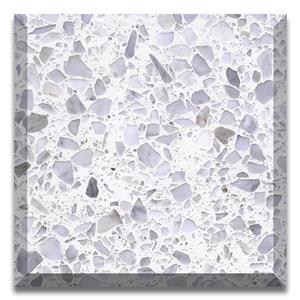
Tonal terrazzo uses a base and aggregates with similar colors. Cream chips sit within a cream matrix. Grey stone appears against a slightly different grey background.
From a distance, the surface may look almost like solid stone. As people move closer, the aggregate becomes more visible.
This approach is particularly useful when designers want texture without creating a strong pattern.
The same terrazzo stone can create very different results. The final look depends on aggregate size, color, and the base color.
In large commercial interiors, tonal terrazzo can create a calm visual effect while still adding depth to the floor.
4. Large-Format Terrazzo Slabs Are Changing the Layout
Format is becoming another important part of terrazzo design.
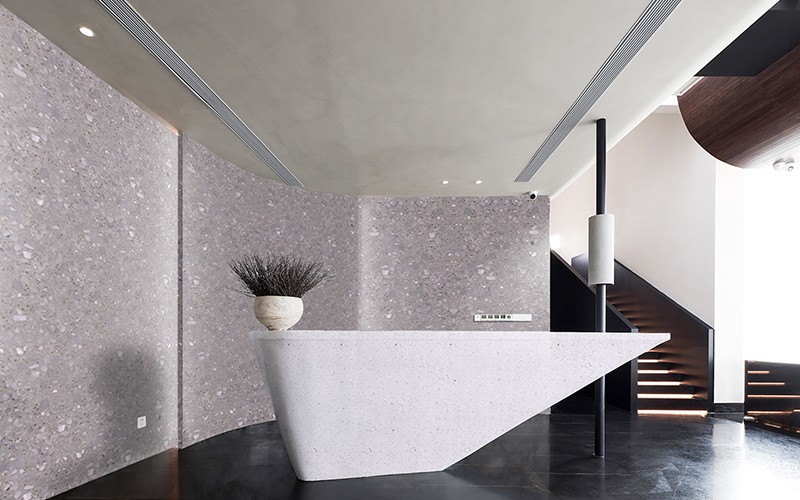
Traditional terrazzo tiles remain practical for many projects. Larger terrazzo slabs, however, can create a more continuous look with fewer joints.
Large formats can also give designers more control over how the aggregate pattern appears across a wall or floor. A larger surface keeps the stone pattern visible across a wider area instead of dividing it into many small sections.
This is particularly useful for feature walls, reception areas, large floors, counters, and other surfaces where visual continuity matters.
The move toward larger formats is also connected with the broader development of precast terrazzo. Factory production allows manufacturers to produce large components with controlled dimensions and repeatable finishes. ArchDaily has recently highlighted how precast terrazzo is expanding beyond traditional flooring into stairs, wall cladding, furniture, and other architectural elements.
5. Matte and Honed Finishes Feel More Contemporary
Surface finish can change the character of the same terrazzo mix.
Polished surfaces remain popular when designers want stronger reflection and a brighter appearance. However, honed and matte finishes are gaining attention because they create a softer and more natural visual effect.
A matte finish can reduce glare and allow the color and aggregate to become the main focus.
This works especially well with warm neutral colors and larger stone chips. The surface does not need a high-gloss finish. A honed or matte finish can give terrazzo a more natural stone-like look while keeping its distinctive pattern.
For commercial projects, designers should consider the intended use, cleaning needs, lighting, and technical
requirements before choosing the final finish.
6. Terrazzo Is Moving Beyond the Floor
Although the terrazzo floor remains one of its most established applications, terrazzo is no longer limited to flooring.
Designers are using terrazzo for walls, stairs, countertops, reception desks, vanity surfaces, furniture, and other interior elements.
This broader use creates an opportunity to develop a consistent material language throughout a project.
For example, a hotel may use one terrazzo design on the main floor and a matching finish on reception counters or wall panels. The same aggregate family can then connect different areas without making every surface identical.
ArchDaily has also covered terrazzo in wall cladding, countertops, furniture, and other interior applications. This shows how the material is moving beyond traditional flooring.
7. Inorganic Terrazzo Keeps the Material Rooted in Stone
Design trends may change, but the basic material structure remains important.
Our inorganic terrazzo uses a cement-based binder combined with natural stone aggregates. At Dongxing, we use materials such as marble, granite, and quartz aggregates to create different surface effects.
The manufacturing process also influences the final appearance.
We use high-frequency vibration and vacuum high-pressure molding to increase material density and create a compact slab structure.After molding and curing, we grind and finish the slabs. This process exposes the aggregates and creates the required surface appearance.
For us, terrazzo design starts before the slab reaches the polishing line. Aggregate size, color distribution, base color, and production consistency all affect the final surface.
What Will Terrazzo Look Like in 2026?
The most interesting part of the current trend is that terrazzo is moving in more than one direction.
Some designers are choosing bold aggregates and strong contrast. Others prefer warm neutrals, fine chips, and subtle tonal surfaces.
Both approaches can work.
The key is to match the aggregate size, color, format, and finish to the space. Do not choose a trend simply because it is popular.
For commercial projects, this approach is particularly important. A material may look impressive in a small sample. However, the result can look very different when the same material covers hundreds of square meters.
At Dongxing Group, we see terrazzo as a design material as much as a flooring material. A material may
look impressive in a small sample. However, the result can look very different when the same material
covers hundreds of square meters.
In 2026, terrazzo is not returning to one single style. It is becoming more flexible, more considered, and
more closely connected to the overall design of a space.