What Is Terrazzo? Performance and Design in Large Projects

Terrazzo has steadily regained its position as a preferred surface material in modern construction, particularly in large-scale commercial and public projects. Airports, hospitals, educational facilities, office buildings, and mixed-use developments increasingly rely on terrazzo flooring for its durability, visual consistency, and long-term value. While terrazzo has a long history, its role today is defined by performance requirements that extend far beyond appearance. To understand why terrazzo continues to be specified at scale, it is necessary to begin with a clear explanation of what is terrazzo and how it functions in demanding environments.
What Is Terrazzo?
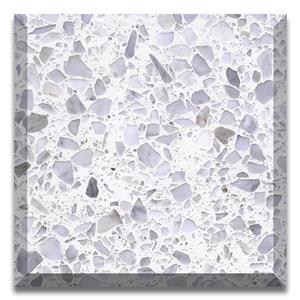
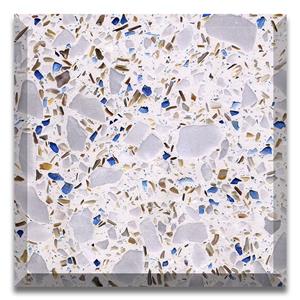
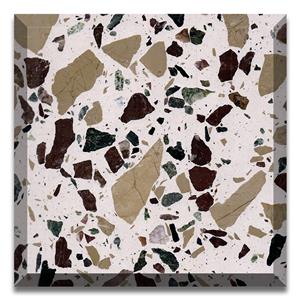
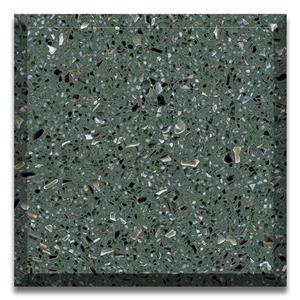
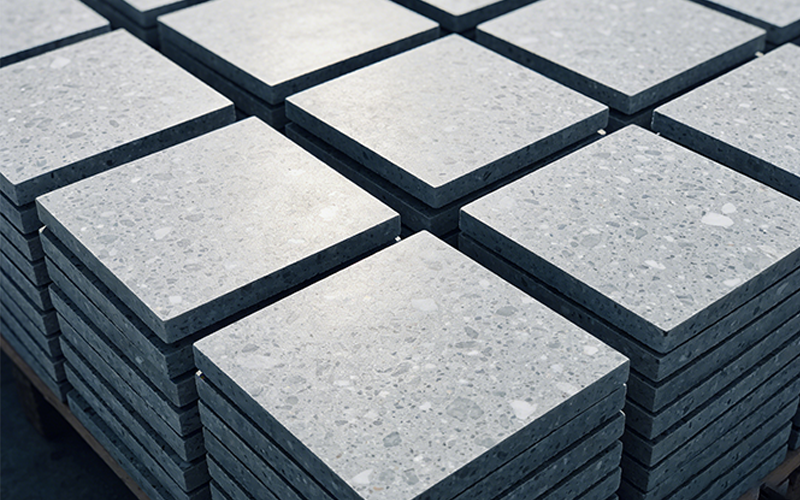
Terrazzo is a composite flooring material produced by embedding aggregates—such as marble, quartz, granite, or recycled glass—into a cement-based or inorganic binding system. Once the mixture has cured, the surface is ground and polished to reveal the aggregates, creating a smooth, dense, and visually unified terrazzo floor. Unlike single-piece natural stone, terrazzo is engineered to achieve controlled results in color, texture, and performance.
Because terrazzo flooring combines natural aggregates with a manufactured binder, it bridges the gap between natural stone aesthetics and engineered reliability. This combination allows terrazzo to maintain a consistent appearance across large floor areas while still offering visual depth and material character.
Performance Characteristics of Terrazzo Flooring at Scale
Large-scale projects impose strict performance demands on flooring systems. Surfaces must tolerate continuous foot traffic, frequent cleaning, and long service cycles without showing premature wear. Terrazzo flooring is well suited to these conditions due to its dense structure and high abrasion resistance. When properly installed and finished, terrazzo floors can perform reliably for several decades, often outlasting many alternative flooring materials.
Another critical factor in large projects is consistency. In spaces covering thousands of square meters, even minor variations in material thickness or color can become visually disruptive. Terrazzo systems—particularly precast terrazzo tiles and slabs—offer a high level of dimensional accuracy and surface uniformity. This predictability supports smoother installation processes and reduces the risk of on-site inconsistencies, which is especially important in fast-paced commercial construction schedules.
Terrazzo Design and Visual Control in Large Interiors
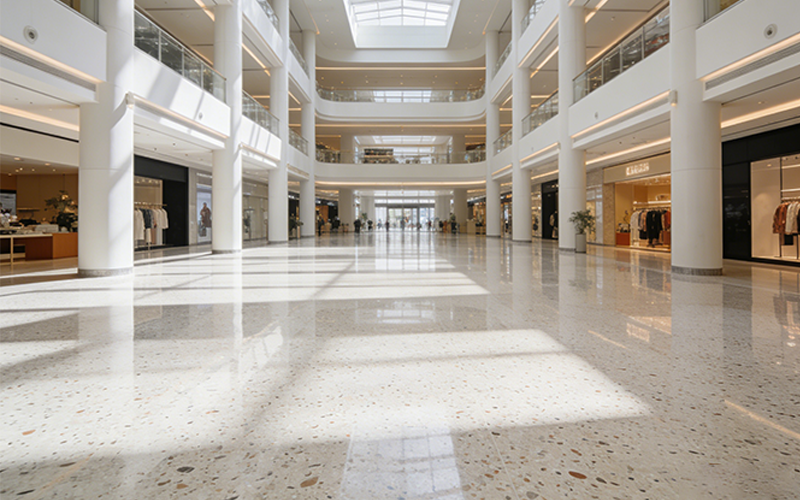
Beyond technical performance, terrazzo design flexibility is one of the material’s most valuable attributes. Designers can precisely control aggregate size, distribution, and color, allowing terrazzo flooring to adapt to a wide range of interior concepts. Subtle, fine-grain terrazzo floors are often used in healthcare and institutional settings, while bolder aggregate combinations are selected for retail, cultural, and public spaces.
In large interiors, terrazzo enables visual continuity across multiple zones without excessive joints or pattern interruptions. Designers frequently use terrazzo to guide circulation paths, differentiate functional areas, or integrate branding elements directly into the floor surface. This ability to combine functional performance with intentional design makes terrazzo particularly effective in large-scale architectural environments.
Terrazzo Compared with Traditional Stone Flooring
When evaluating terrazzo alongside traditional stone materials such as marble or granite, important distinctions emerge. Natural stone offers unique veining and variation, but this variability can present challenges in large installations where visual consistency is required. Matching slabs across expansive areas often increases material waste and complicates installation planning.
Terrazzo, by contrast, delivers a controlled appearance while still incorporating natural stone aggregates. From a performance standpoint, terrazzo flooring generally offers greater resistance to surface wear and requires less intensive long-term maintenance. For project teams managing large developments, terrazzo provides a balance between aesthetic appeal and operational reliability that traditional stone flooring may struggle to achieve at scale.
Installation Formats for Large-Scale Terrazzo Projects
Modern terrazzo flooring systems are available in both poured-in-place and precast formats. Poured terrazzo is typically used where seamless, continuous surfaces are required or where complex layouts are involved. Precast terrazzo tiles and slabs, on the other hand, are increasingly favored in commercial construction due to factory-controlled quality and faster on-site installation.
Precast terrazzo allows for improved scheduling efficiency and reduces labor variability, which is a significant advantage in large projects with tight timelines. Both formats, when properly specified, deliver the same core performance characteristics that define terrazzo as a long-lasting flooring solution.
Long-Term Value of Terrazzo Flooring
Although terrazzo flooring may involve a higher initial investment compared to some alternatives, its long service life often results in lower overall costs over time. Terrazzo floors typically require fewer replacements and maintain their appearance with routine cleaning and periodic surface care. For facility managers and property owners, this reliability translates into reduced downtime and predictable maintenance planning.
In commercial and public buildings where consistency, hygiene, and durability are essential, terrazzo flooring continues to demonstrate strong long-term value.
Common Applications of Terrazzo Today
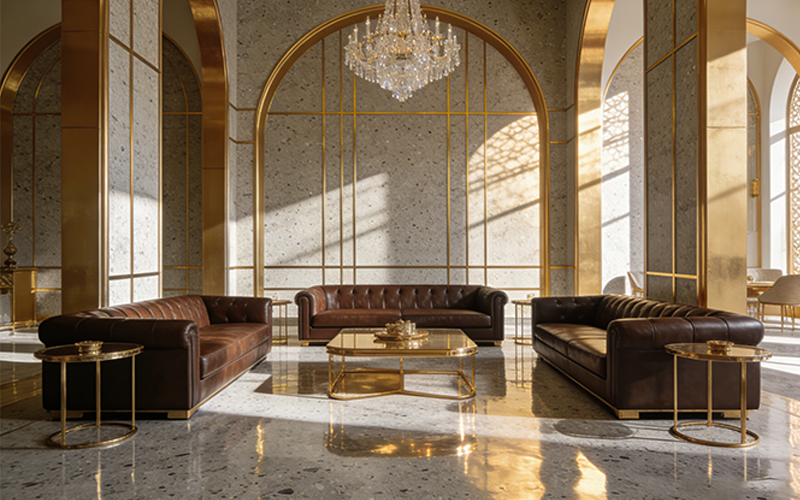
Today, terrazzo is widely used in transportation hubs, healthcare facilities, educational campuses, corporate offices, retail environments, and high-end residential developments. Its adaptability allows terrazzo flooring to meet both functional and visual requirements across diverse project types. As design and construction standards continue to evolve, terrazzo remains relevant due to its proven performance and design versatility.
Conclusion
So, what is terrazzo in the context of modern, large-scale construction? It is an engineered flooring system that combines the visual qualities of stone with controlled performance and design flexibility. For projects that demand durable terrazzo floors, consistent terrazzo flooring systems, and adaptable terrazzo design solutions, terrazzo remains a practical and well-established choice for large-scale applications.